Discover the best RC airplanes designed for beginners and hobbyists alike. This guide highlights reliable ready-to-fly models offering stability, ease of use, and entertaining flight dynamics. Each pick is chosen for safe handling, durable construction, and strong value, helping you find a capable aircraft for outdoor fun, learning, and occasional aerobatics. Below is a quick summary of five top choices, followed by in-depth sections with key features and what to consider when buying.
| Product | Brand | Key Benefit |
|---|---|---|
| LEAMBE 4 Channel RC Plane | LEAMBE | Beginner-friendly with three control modes |
| 4DRC RC Planes | 4DRC | Non-stop fun with headless mode and LED visibility |
| HAWK’S WORK 2 CH RC Airplane (Red) | HAWK’S WORK | Self-stabilizing, easy first flyer |
| Lovovia Foam RC Airplanes | Lovovia | Beginner-friendly with LED night flight |
| DEERC G650 RC Plane | DEERC | Luxury jet design with dual batteries for longer flights |
Use this guide to compare realism, durability, flight time, and control complexity. Each product section below includes an at-a-glance overview and practical considerations to help you pick the best RC airplane for your needs.
LEAMBE 4 Channel RC Plane — Ready To Fly

The LEAMBE P51 Mustang RC airplane is designed to be accessible for beginners while offering engaging aerobatic potential. Made from lightweight elastomer foam, it balances lightness with durability for outdoor flights. It provides three flight modes—Beginner, Intermediate, and Experienced—allowing new pilots to progress at their own pace. A new Propeller Saver technology helps protect the plane from damage and simplifies propeller replacements, contributing to longer service life and fewer interruptions during learning sessions.
Key features include stability in outdoor conditions, straightforward mode changes, and easy maintenance with a quick propeller return. Potential buyers should consider wind tolerance and space for safe operation, as the P51 Mustang’s lighter frame performs best in calm to mild breeze conditions. Overall, it suits beginners entering the hobby and seasoned hobbyists seeking a casual, reliable flyer with upgradeable skill paths.
4DRC RC Planes — Versatile For All Ages

4DRC offers a multi-mode RC plane tailored for both kids and adults. Its robust feature set includes headless mode, three speed options, altitude hold, and 360° stunts. The throw flight mode lets you launch the plane into the air with minimal effort, kicking off the flying experience quickly. The included simple controller makes learning fast, with intuitive buttons guiding beginners to basic take-offs, landings, and flips.
Night flights are enhanced by built-in LED lights and glowing trails, improving visibility as daylight fades. This model is well-suited for family play, classroom demonstrations, or backyard flying sessions. Consider the environment—as a foam-bodied plane, it performs best in open spaces free from obstacles. The 4DRC plane emphasizes ease of use, strong entry-level appeal, and ongoing fun as skills develop.
HAWK’S WORK 2 CH RC Airplane — Easy Fly

HAWK’S WORK presents a simple path into RC flight with a built-in self-stabilization system, making it a practical choice for beginners. Its light weight foam structure helps it withstand minor crashes while keeping flight characteristics forgiving. The 2.4GHz radio control supports at least four directional commands and can accommodate multiple aircraft simultaneously without interference, which is ideal for training with a friend or classroom setting.
This model emphasizes consistent stability and straightforward operation, minimizing the learning curve. For buyers, consider the plane’s performance in varying wind conditions and the ease of sourcing replacement parts. It’s a reliable first step into RC aviation with a focus on accessible handling and dependable flight behavior.
HAWK’S WORK 2 CH RC Airplane — F-22 Style

This variant from HAWK’S WORK offers the same beginner-friendly design with a distinctive F-22 aesthetic, combining stability with straightforward handling. It features a light, durable foam body and a 2.4GHz control system that supports basic directional control. The plane is designed for easy learning curves, enabling users to perform rudimentary stunts and transitions after a short practice period.
Key considerations include how often you plan to fly, the space available for takeoffs and landings, and the availability of replacement parts. The F-22 model stands out for fans of jet-inspired aesthetics who want a simple, dependable flyer for practice sessions and casual outdoor flights.
Lovovia Foam RC Airplanes — Night Flight LED

Lovovia’s foam RC airplanes are designed with beginners and kids in mind, offering one-key takeoff/landing, altitude hold, and 360° roll capabilities. The aircraft’s lightweight construction helps it endure minor crashes while maintaining stable flight dynamics. The LED lighting adds nighttime visibility and an engaging visual display during evening flights.
This model emphasizes easy control and visible flight paths, making it suitable for learning, family play, and outdoor fun in well-lit spaces. When considering Lovovia, assess flight range, battery life, and the availability of replacement parts, as these factors influence long-term enjoyment and reliability.
volantexrc 4CH RC Plane — Jet F-16 Style
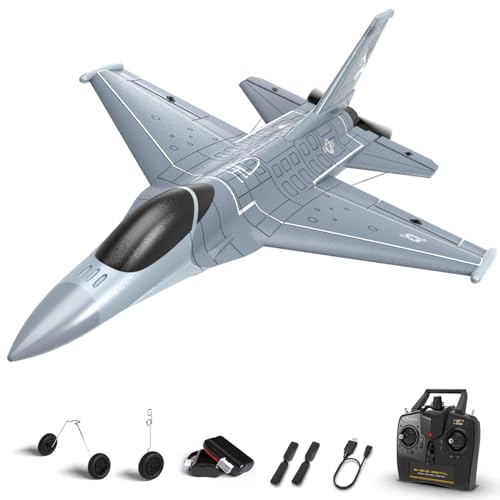
Volantexrc offers a sophisticated 4-channel RC jet plane focused on adult or experienced pilots. It features an Xpilot stabilizer system that enhances aerobatic capability and stability for advanced maneuvers. The three-level flight control supports a range of pilot proficiency, from assisted to manual control, allowing gradual skill growth. Its 2.4GHz link provides a distance suitable for field flying with good anti-interference performance.
Ideal for outdoor enthusiasts who enjoy precision and challenging aerobatics, this model requires a suitable open space. Prospective buyers should weigh the desire for advanced control against the learning curve and potential investment in spare parts and batteries for extended flight sessions.
Buying Guide: Key Purchase Considerations And Comparisons
- Skill level and learning curve: Start with models offering beginner modes, self-stabilization, or altitude hold to reduce the initial challenge. Progress to three-mode or full manual control as confidence grows.
- Flight environment: Foam-bodied planes perform well in calm outdoor spaces. Larger planes may require open fields; ensure you have a safe, obstacle-free area for takeoffs and landings.
- Durability and repairs: Look for propeller saver technology, replaceable parts, and sturdy foam construction to minimize downtime after bumps and crashes.
- Battery life and charging: Consider multiple batteries or longer-lasting packs for extended flight time. Keep an eye on weight balance when adding extra batteries.
- Control range and interference: A solid 2.4GHz radio system reduces cross-channel interference, especially when flying with others nearby.
- Night visibility: Models with built-in LED lighting offer extended flying opportunities at dusk or in low-light conditions, enhancing tracking and safety.
- Maintenance and parts availability: Ensure spare parts and replacement components are readily available from the brand or retailers to keep flights uninterrupted.
- Budget and long-term value: While some jets and advanced planes deliver impressive performance, entry-level foam planes provide better initial value and learning support.
Across these options, careful matching of your environment, skill level, and budget will guide you to the best RC airplane. Beginners may prioritize stability and ease of use, while experienced pilots might seek advanced stabilization and aerobatic capabilities for more demanding flights.