Explore a curated selection of working model engines you can build to boost STEM learning at home or in the classroom. These realistic, operable kits demonstrate engine physics, mechanical design, and practical engineering concepts from a compact V8 to visible piston action. Each kit includes components you can assemble, observe, and power to bring theory to life. The following picks cover different piece counts, powering methods, and level of complexity to suit beginners through enthusiastic hobbyists.
| Product | Pieces / Power | Key Benefit |
|---|---|---|
| Playz V8 Combustion Engine Kit | 270 parts, battery-powered | Realistic moving pistons and engine sounds |
| V8 Engine Model Kit That Runs (905 PCS) | 905 pieces, USB motor | Highly detailed internal components |
| V8 Engine Model Kit With LED & App (660 PCS) | 660 pieces, LED, app control | Interactive, tech-enabled learning |
| V8 Engine Model Kit That Works (1370 PCS) | 1370 pieces, motorized | Premium build with visible powertrain |
| V8 Engine Model Kit With USB (703 PCS) | 703 pieces, USB charging motor | Compact yet authentic engine action |
The following sections highlight five top options for building a visible, working engine model. Each product includes a brief overview, what makes it unique, and practical considerations to help you choose the right kit for your goals.
Playz V8 Combustion Engine Model Kit That Runs

The Playz V8 engine kit provides a hands-on experience for both adults and young learners. It is designed to deliver a working miniature V8 engine with realistic pistons and an interactive setup that mimics real engine action. The model engages users with visible mechanical components and the sensation of operating a genuine engine. While it runs, it produces the feel of a true engine with engaging motion and audible cues to enhance learning. Battery-powered operation enables portable, classroom-friendly use (requires 3x AA batteries, not included).
What stands out: a strong emphasis on realism and tactile learning. The 270 parts offer a detailed build that highlights crank, pulley, and valve interactions. This kit suits families and hobbyists who want a satisfying, observable engine running experience without requiring battery packs or external infrastructure beyond standard batteries.
Key considerations: suitability for ages 12 and up and a preference for a visible V8 with audible engine cues. Some users may want to upgrade to higher-piece kits for deeper exploration of internal systems over time.
V8 Engine Model Kit That Runs (905 PCS)
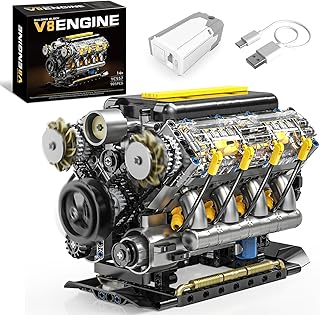
This kit centers on a classic V8 engine with moving pistons and a functioning valve train. It includes a turbocharger and exhaust system to illustrate the full engine cycle. Powered by a two-speed USB rechargeable motor, it runs without disposable batteries and allows the user to observe motor operation, including rotor and piston dynamics. The durable construction and 905 pieces support a precise, high-fidelity build that appeals to serious hobbyists and STEM enthusiasts.
What stands out: an authentic reproduction with emphasis on mechanical realism and a robust building experience. The kit demonstrates how power is transmitted through the drivetrain and how components like the turbocharger influence performance, making it a compelling choice for those seeking depth alongside visual accuracy.
Key considerations: requires USB power and a steady workspace. The higher piece count appeals to users who enjoy detailed construction and long-term projects, but it may be more challenging for younger builders.
V8 Engine Model Kit With LED & App Control (660 PCS)

This kit blends traditional building blocks with modern technology. It includes LED lighting and an app-enabled control system that lets builders simulate engine sounds and monitor engine operation. The 660-piece set provides a balance between complexity and manageability, making it suitable for teens and adults who appreciate digital interactivity alongside mechanical construction.
What stands out: app connectivity adds an era-spanning learning angle, showcasing how electronics and software interact with classic mechanical systems. The LED features provide a visually engaging way to study timing, exhaust flow, and power cycles in a compact form factor.
Key considerations: a higher emphasis on electronics means some learners may need basic programming or app usage familiarity. The kit suits classrooms or households pursuing a tech-forward STEM experience.
V8 Engine Model Kit That Works (1370 PCS)

Producing a premium, expansive build, this kit offers 1,370 parts with a motorized drivetrain to demonstrate authentic power transfer and timing. It emphasizes realistic integration of core components such as camshafts and turbo systems, enabling hands-on exploration of how a V8 engine operates in a complete cycle. The kit is positioned for advanced builders who want a visually striking, fully functioning engine model.
What stands out: exceptional detail and mechanical fidelity, designed to reveal the intricate relationships between engine subsystems. The assembly experience is lengthy, but the payoff is a highly authentic, running engine model that can serve as a long-term display piece or educational demonstration.
Key considerations: best suited for experienced builders due to its size and complexity. It provides a substantial educational payoff but may require a well-organized workspace and time commitment.
V8 Engine Model Kit That Runs (703 PCS)
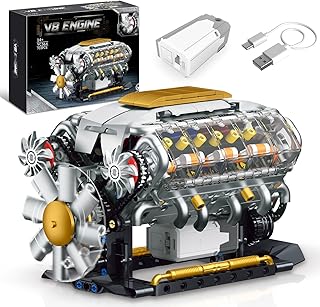
This compact kit focuses on a realistic V8 engine with a transparent cylinder head to visualize piston motion and valve timing. The inclusion of a USB charging motor removes the need for disposable batteries, enabling a clean, repeated powering solution. ABS materials ensure a safe, durable build suitable for repeated assembly and disassembly, making it approachable for both older children and adults.
What stands out: a balance of educational value and accessibility. The USB-powered motor provides simplicity and reliability, while the transparent design helps learners observe the exact sequence of engine operation.
Key considerations: ideal for learners who want a robust, smaller-scale project with visible action and minimal maintenance. The build remains instructive without overwhelming new builders with excessive complexity.
Buying Guide: Key Purchase Considerations For Working Model Engines
To select the best working model engine kit, consider the following factors:
- Learning goals: Do you want pure observation, or do you prefer interactive controls, sensors, and app integration?
- Complexity and pieces: Higher-piece kits offer detailed realism but require more time and patience. Start with mid-range sets for balanced learning and engagement.
- Power and power source: USB-powered motor kits are convenient for desktops, while battery-powered sets offer portability but require battery replacements.
- Material quality and durability: ABS and robust connection points help withstand frequent assembly and disassembly without wear.
- Educational value: Look for kits that demonstrate piston movement, valve trains, turbocharging, and exhaust systems to maximize conceptual understanding.
- Expansion potential: Some kits are compatible with other sets or modular builds, enabling ongoing projects as skills grow.
- Age appropriateness: Ensure the kit matches the builder’s age and experience—some sets are ideal for teens, others suit adults and hobbyists seeking advanced challenges.
- Support and documentation: Clear instructions, online tutorials, and customer support improve the hands-on experience and reduce setup frustration.
From a practical perspective, the best choice aligns with your desired balance of realism, interactivity, and time commitment. If you’re building for a classroom, consider kits with straightforward assembly, durable parts, and options for group collaboration. For a home hobbyist, look for higher-piece kits that reveal deeper mechanical principles and offer longer-term projects. Across all options, visible engines provide tangible insights into automotive engineering and physics while delivering engaging, repeatable learning experiences.