Choosing the right walker for a 9-month-old can support early mobility and independent play. This article highlights five highly-rated options designed for first steps, safety, and engaging learning features. Each product balances stability with opportunities to develop balance, coordination, and cognitive skills. Read on to compare construction, age suitability, and play features to find the best fit for your little mover.
Summary Table (chosen products)
| Product | Brand | Key Features | Age Range | Amazon Link |
|---|---|---|---|---|
| Bautia Wooden Baby Walker | Bautia | Natural wood, interactive panel, rubber wheels, activity center | 6–12 months (1 year push) | View |
| SYNCFUN Baby Learning Walker | SYNCFUN | Two-speed settings, removable play panel, light-up/ABC features | 6–12 months+ | View |
| YBIKE Pewi Walking Ride On Toy | YBIKE | Grows with child, lightweight aluminum, 360° wheels | 9 months–3 years | View |
| WOODMAM Wooden Baby Walker | WOODMAM | 10-in-1 activity walker, detachable busy board, ergonomic height | 12 months+ | View |
| PULA Baby Push Walker | kidpop | 2-in-1 walker and play wagon, enclosed wheels, non-slip handle | 6–12 months | View |
Below is a deeper look at each option, including design, safety features, and learning opportunities for babies starting to walk.
Bautia Wooden Baby Walker

The Bautia walker combines natural wood with a sturdy frame and smooth edges, prioritizing safety for first steps. It features an interactive activity panel, including a rolling letter wheel and xylophone, designed to support hand-eye coordination and early cognitive skills. Rubber wheels provide a quiet, floor-friendly glide that protects sensitive flooring while offering stable support as babies practice standing and walking. This model positions itself as a safe, healthy option for both boys and girls learning to walk.
Why it suits 9-month-olds
With stable construction and a simplified learning panel, this walker offers a gentle introduction to independent mobility, while its natural materials appeal to parents seeking durable, non-plastic options. The emphasis on first steps and balance makes it a strong choice for 9-month-olds approaching cruising or early walking.
SYNCFUN Baby Learning Walker

SYNCFUN’s walker features two-speed settings to grow with your baby: a low speed for younger infants and a standard pace for older babies. A detachable play panel adds versatility, enabling use on the floor, attached to a crib, or on the walker itself. kids enjoy light-up buttons, sounds, and a piano panel with multiple modes, which can foster sensory exploration and early language skills while encouraging standing and stepping.
Why it suits 9-month-olds
The adjustable speeds and interactive panel support babies who are just starting to stand, promoting confidence as they attempt their first steps. The modular play options provide varied stimulation without overwhelming a new walker user.
YBIKE Pewi Walking Ride On Toy
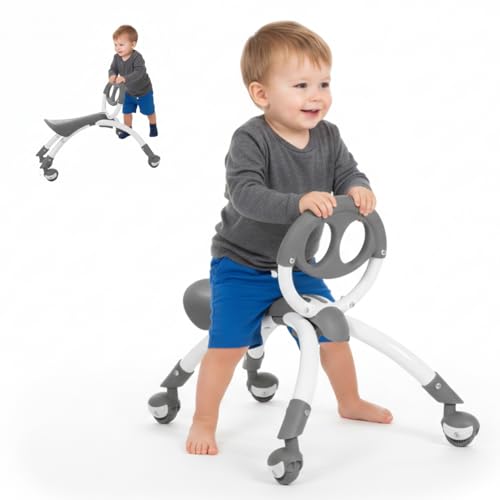
The Pewi is designed to grow with a child from 9 months to age 3, functioning as a ride-on, push toy, and walking aid. Its lightweight aluminum frame, comfortable seat, and durable wheels support safe, multi-directional movement. The design emphasizes balance-building and coordination, with smooth, floor-friendly wheels suitable for indoor use on various surfaces. This makes it a flexible choice for homes and play areas that transition between sitting, standing, and walking play modes.
Why it suits 9-month-olds
As a toddler “walking buddy,” the Pewi provides stability without restricting exploration. Babies can push from behind or ride on the seat as their confidence grows, making it a practical option for early mobility development.
WOODMAM Wooden Baby Walker

WOODMAM’s walker offers a 10-in-1 Montessori-inspired design, including gears, a peek-a-boo window, counting beads, pretend phone, mirror, xylophone, and more. The detachable busy board expands playtime into tabletop learning or travel fun. An adjustable height of about 17 inches helps accommodate early walkers who are still developing posture and balance. This model emphasizes cause-and-effect learning and fine motor development while supporting first steps.
Why it suits 9-month-olds
The 10-in-1 setup introduces a range of activities that encourage exploration from a seated position to standing and stepping along. Its detachable panel can be used for quiet play, aiding in sustained engagement for little ones during the milestone transition to walking.
PULA Baby Push Walker
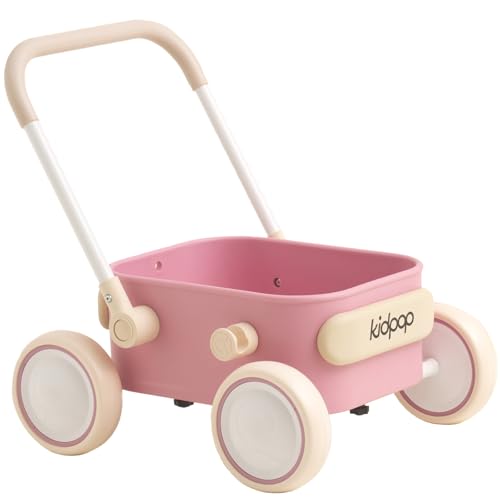
PULA’s 2-in-1 walker doubles as a play wagon, offering a versatile push option for exploring environments. It features fully enclosed wheels for safety, a non-slip handlebar, and a low-gravity design to reduce tipping risks. The hopper is made of food-grade PP material, designed to be durable and easy to clean. EVA wheels ensure smooth rolling on various terrains, making this walker suitable for indoor and outdoor use as a primary mobility aid for early walkers.
Why it suits 9-month-olds
The dual-function design supports both walking practice and imaginative play, helping babies transition from sitting to standing and beyond. The emphasis on safety features and smooth rolling helps parents trust this option for early steps and exploratory movement.
Buying Guide: Key Purchase Considerations
- Age and development alignment: Choose a walker that supports 9-month-old mobility without rushing steps. Look for adjustable heights and ergonomic controls to accommodate growth.
- Stability and safety: Prioritize wide bases, secure handles, non-slip wheels, and materials with rounded edges. Rubber or foam-tired wheels protect floors and reduce tipping risks.
- Learning features: Interactive panels, musical elements, and detachable play boards can stimulate cognitive and motor skills. Consider whether the toy can transition to floor play for variety.
- Versatility: Some models convert into wagons or include tabletop attachments, offering extended use beyond walking practice. This can maximize value.
- Materials and maintenance: Wooden walkers offer durability and a classic look, while plastic variants may include more interactive components. Check for easy cleaning and safety certifications when available.
- Indoor vs outdoor use: If you plan to use the walker outside, ensure wheels are suitable for uneven surfaces and that materials resist weather exposure.
- Storage and portability: Lightweight designs with detachable panels are easier to store and travel with, especially for families on the go.
The five options above provide a range of features from traditional wooden walkers to modern, activity-rich designs. When evaluating, consider your child’s current mobility stage, your living space, and how much emphasis you place on learning activities versus pure mobility support.