Discover affordable drum machines that deliver credible sounds, reliable performance, and practical features for studios, classrooms, and live gigs. This guide highlights five standout options, spanning classic groove boxes to modern standalone units. Each picks up where the last leaves off, offering a mix of built-in sounds, MIDI connectivity, and user-friendly controls to help you create, perform, and produce with confidence.
Product Overview
| Product | Brand | Key Benefits | Typical Use |
|---|---|---|---|
| Alesis SR-16 | Alesis | Iconic drum machine with 233 sounds, built-in effects | Songwriting, performances |
| Alesis SR-18 | Alesis | Expanded library (500 sounds), robust I/O | Live gigs, remixing |
| Donner STARRYPAD | Donner | 16 pads, assignable faders/knobs, USB MIDI | Beatmaking, sampling |
| Behringer LM Hybrid | Behringer | Hybrid sampling capabilities, affordable | Basic productions, practice |
| Akai MPC One+ | Akai Professional | Standalone workflow, native NI integration | Beat making, production |
These options balance cost with independence from a computer, while offering features that suit both beginners and more seasoned musicians seeking a reliable groove engine.
Alesis SR-16: Studio-Grade Standalone Drum Machine
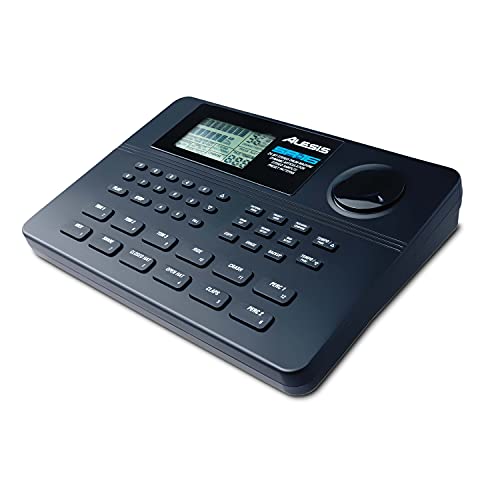
The Alesis SR-16 is a studio-icon staple for songwriters and live performers. It ships with 233 professional sounds and built-in effects that add realism to drum parts. A key feature is its seamless MIDI connectivity, enabling easy integration with keyboards, computers, DAWs, and electronic drum kits. This model is known for its reliability, making it a popular choice for those seeking a long-term, hands-on groove machine without relying on a computer.
Alesis SR-18: Expanded Drum Library with On-Board Effects

The Alesis SR-18 builds on the SR-16 with a larger sound library, offering 500 professional sounds. Its performance-driven I/O and in-built effects provide versatility for live performances and studio work. Like the SR-16, it supports complete MIDI connectivity, ensuring compatibility with keyboards and DAWs. This model suits buyers who want a broader sonic palette without stepping into high-end gear.
Donner STARRYPAD: 16 Pad Beat Maker with Faders

The Donner STARRYPAD is a versatile MIDI pad controller with 16 backlit pads and 3 banks for 48 assignable pads. It includes two faders, two knobs, and three buttons for extra control, plus a USB-C interface for plug-and-play operation. Its class-compliant design makes it compatible with a wide range of systems, making it a practical option for producers who want tactile pad-based beat making and light sampling capabilities without a heavy price tag.
Behringer LM Hybrid Drum Machine
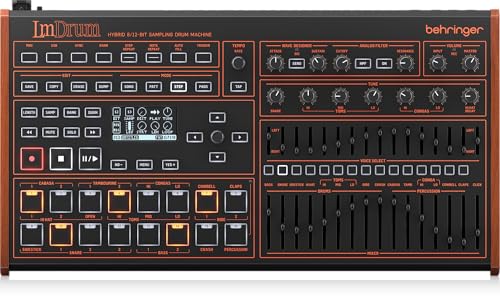
The Behringer LM Hybrid Drum Machine emphasizes hybrid sampling, offering a cost-effective path to integrated drum sounds and live performance compatibility. While it may not have the depth of higher-tier models, it provides essential groove creation tools and a straightforward workflow, appealing to budget-conscious users who still require solid drum machine performance.
Akai MPC One+ Standalone Drum Machine

The Akai MPC One+ is a standalone powerhouse that combines a Beat Maker and MIDI Controller into one compact unit. It features WiFi and Bluetooth MIDI, 16 velocity-sensitive RGB pads, and a 7-inch display for intuitive navigation. Native Instruments integration and a robust multi-core processor support a diverse production workflow, making it a strong choice for users who want a capable, future-proof device without a computer dependency.
Buying Guide: Key Purchase Considerations
- Standalone versus computer-connected: Decide if you prefer a self-contained unit or an instrument that integrates with a computer DAW for deeper editing and looping capabilities.
- Sound library and realism: Look for the size and variety of the built-in sounds, plus any processing effects that add depth to drums, percussion, and grooves.
- Ease of use and workflow: Consider the layout, pad sensitivity, and access to quick controls like tempo, swing, and pattern sequencing.
- Connectivity: Check MIDI compatibility, USB, audio outputs, and whether the device supports modern interfaces (WiFi/Bluetooth) for updates or remote control.
- Portability and durability: For live performance or travel, weight, ruggedness, and power options (battery or USB power) matter.
- Expandability: Assess whether the device can grow with you through additional software, sample packs, or external controllers.
- Price-to-value balance: Weigh features against cost to identify the best value option for your current needs and future plans.
- Security of updates and support: Consider brands with active product support, firmware updates, and a broad user community for tips and presets.
Across these models, buyers gain a spectrum of capabilities—from compact pad controllers and entry-level drum machines to more expansive standalone devices with robust DAW integration. Consider your primary use (studio work, live performance, or classroom teaching) and your preferred workflow when selecting the best value drum machine for your setup.