Exploring engineering concepts through hands-on play helps kids develop critical thinking, problem solving, and creativity. This guide highlights five engaging STEM toys that suit diverse interests—from solar power and hydraulics to structural design and roller coasters. Each pick supports screen-free learning while sparking curiosity about how things work. The selections emphasize durability, age-appropriate challenges, and clear learning outcomes relevant to budding engineers.
| Product | Brand | Key Focus | Age Range |
|---|---|---|---|
| Sillbird 12-in-1 Solar Robot | Sillbird | Solar power, robotics, problem solving | 8-13 |
| Thames & Kosmos Bridges & Skyscrapers | Thames & Kosmos | Structural engineering, forces | 8-14 |
| Teach Tech Hydrobot Arm Kit | Elenco | Hydraulics, robotics, hands-on building | 12+ |
| Thames & Kosmos Roller Coaster | Thames & Kosmos | Physics, motion, energy | 9-14 |
| IQ BUILDER STEM Set | IQ BUILDER | STEM foundations, construction | 3-10 |
Sillbird 12-in-1 Solar Robot Building Kit
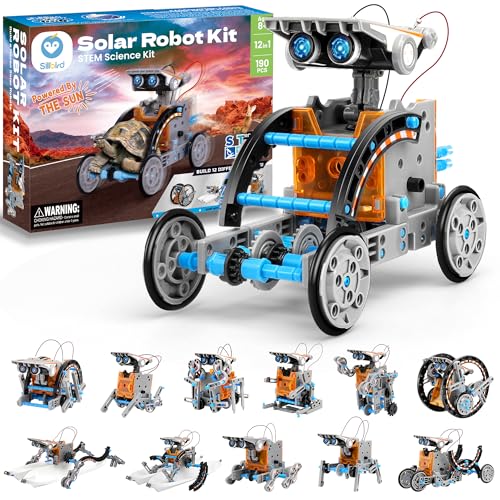
The Sillbird Solar Robot Kit provides a screen-free build-and-play experience that introduces solar energy and simple robotics. With 190 pieces, the kit enables kids to assemble multiple robot configurations, encouraging experimentation and iteration. It supports outdoor exploration by running on sunlight and indoors with a strong light source, helping young engineers understand renewable energy in practical terms. The kit is designed to grow with skill level, making it suitable for learners who are developing foundational engineering and problem-solving abilities.
Thames & Kosmos Bridges & Skyscrapers

This kit focuses on structural engineering concepts by allowing builders to construct 20 models that illustrate force, load, compression, and tension. A large collection of interchangeable building pieces and a detailed illustrated manual guide hands-on exploration of how structures bear weight and respond to stress. The project-based approach is well-suited for kids who enjoy architecture, physics, and problem-solving challenges, providing a tangible link between theory and construction.
Teach Tech Hydrobot Arm Kit

The Hydrobot Arm Kit demonstrates hydraulic engineering without the need for batteries. Learners build a working robotic arm with a six-axis, 270-degree rotating gripper, controlled by levers that simulate real-world hydraulic systems. The kit highlights core mechanics of motion, force transmission, and control, making it a compelling option for students aiming to understand how hydraulics power movement and manipulation in robotics. Its hands-on format supports practical exploration of mechanical design and problem solving.
Thames & Kosmos Roller Coaster Engineering

This kit invites learners to design and build working roller coasters, followed by physics experiments that explore force, motion, energy, velocity, and more. It challenges kids to think about track layout, gravity, friction, and safety while solving building challenges. As a multi-step engineering activity, it draws connections between mathematics, physics, and problem-solving, making it a robust choice for curious minds who enjoy demonstrations of real-world dynamics on a manageable scale.
IQ BUILDER STEM Building Set
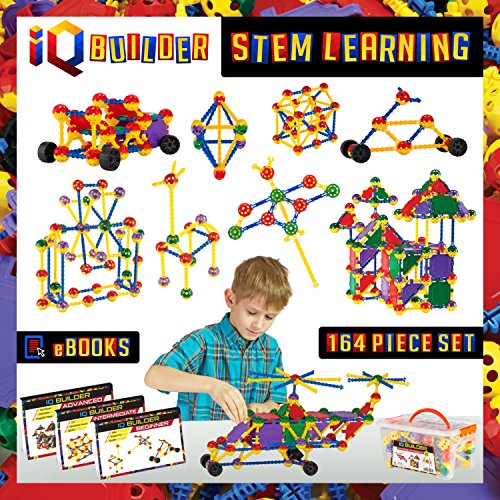
The IQ BUILDER set emphasizes foundational STEM skills with a focus on critical thinking, reasoning, and problem solving. Marketed toward children and early learners, it serves as a versatile entry point into construction-based engineering activities. The set is praised for its classroom-friendly design and brand emphasis on building cognitive talents. It’s a suitable option for guided learning or family STEM sessions, helping young builders develop confidence in planning, testing, and iterating their ideas.
Buying Guide: Key Purchase Considerations
Selecting the right engineering toys involves aligning the activity with a child’s interests, developmental stage, and learning goals. Here are essential factors to consider:
- Age and skill level: Choose kits with appropriate complexity to avoid frustration while still offering a challenge that fosters growth.
- Hands-on learning value: Look for projects that require assembly, adjustment, and experimentation, not just passive assembly or display.
- Core concepts: Identify which STEM areas to emphasize—solar energy, hydraulics, structural engineering, or physics—and pick kits that provide clear explanations and experimentation opportunities.
- Durability and quality: Seek sturdy pieces and reliable instructions to minimize downtime and maximize learning time.
- Expandability: Consider whether the kit can be augmented with additional components or combined with other sets to grow with the learner.
- Safety and age-appropriate design: Check for small parts and any required supervision levels appropriate for the child’s age.
- Learning outcomes: Some kits include manuals, experiment guides, or story-based elements that help reinforce concepts and maintain engagement.
Perspective differences matter: parents may value screen-free exploration and long-term skill-building, while teachers might prioritize classroom integration and standardized learning outcomes. For older learners, hydraulic and robotics kits often offer deeper engineering challenges. For younger children, a strong foundation in blocks, gears, and basic mechanisms builds confidence before advancing to more complex systems.
In selecting a set, consider how much guided instruction versus independent exploration the child prefers. Kits with manuals and structured challenges can provide a reliable learning arc, while more open-ended sets invite creative experimentation and iterative problem solving. Finally, assess whether you want portable, outdoor-friendly options or indoor kits designed for tabletop play to fit your family routine and space.