Finding learning toys that support children with dyslexia can boost confidence and reading progress without feeling like study. This guide highlights five educational toys designed to build literacy skills, phonemic awareness, and fine motor skills in an entertaining format. Each product blends multisensory approaches with structured practice, helping kids stay engaged while reinforcing essential reading foundations.
Summary of chosen products:
| Product | Brand | Key Benefit | Link |
|---|---|---|---|
| Speak & Spell Electronic Game | Basic Fun | Spelling practice with five modes | Amazon |
| TOP BRIGHT Preschool Learning Toys | TOP BRIGHT | Early math and counting concepts | Amazon |
| hand2mind Reading Rods | hand2mind | Phonics and word building | Amazon |
| hand2mind Phoneme Phone | hand2mind | Phonemic awareness and speech therapy aid | Amazon |
| Sunny Days Expandable Ball | Sunny Days Entertainment | Sensory and fine-motor play | Amazon |
Speak & Spell Electronic Game

The Speak & Spell is a retro-inspired educational toy that supports spelling and phonemic awareness through interactive play. It offers five modes—Spell, Mystery, Say It, Secret Code, and Letter—each designed to challenge learners at different levels. The iconic 80s-style graphics and sounds can engage kids who respond well to multisensory cues, reinforcing memory for letter-sound relationships and word formation in a non-traditional, game-based format.
Key benefits include structured practice with progressive difficulty and varied activities that reduce monotony. This toy can complement reading instruction by providing a hands-on way to connect sounds to letters, a foundational skill for dyslexic learners who often benefit from multisensory engagement. While it emphasizes spelling, the game format helps with decoding and rapid retrieval of word parts.
TOP BRIGHT Preschool Learning Toys

Designed for toddlers and preschoolers, this educational toy set emphasizes early math concepts, counting, and problem-solving. It promotes Montessori-inspired independent play, encouraging concentration and logical thinking through hands-on manipulation. Colorful blocks and manipulatives provide concrete representations of abstract ideas, helping children connect numbers with quantities and operations in a way that supports decoding and word-building tasks later on.
For dyslexia-focused learning, the manipulatives help bridge oral and written language by linking numeracy with tactile exploration. The product grows with a child, allowing a smooth transition from basic counting to more complex math ideas, which can reduce frustration during early literacy activities by offering engaging, tangible experiences.
hand2mind Reading Rods

Reading Rods are a tactile literacy tool designed to develop decoding, word-building, and spelling skills. They help students construct CVC words and move toward more complex vocabulary with color-coded, connectable rods. This hands-on approach supports phonemic awareness by making sound-letter correspondences visible and manipulable, which is particularly helpful for learners who benefit from multisensory instruction.
These rods can be integrated into small-group lessons or used in independent practice. By providing a physical scaffold for phonics tasks, Reading Rods support repeated exposure to phonemes and word formation patterns, helping to build confidence during early reading activities and reduce frustration associated with decoding challenges.
hand2mind Phoneme Phone

The Phoneme Phone is a speech therapy-oriented tool that heightens listening and phonemic awareness. Students speak into the receiver and hear amplified feedback, providing a multisensory way to practice phoneme discrimination and sound-to-letter mapping. This can be especially beneficial for children who need auditory reinforcement or who benefit from a structured, interactive approach to phonics.
Teachers and parents can use the device to guide targeted phoneme practice, improving listening accuracy and pronunciation. The embodied feedback loop supports speech-to-print connections and can be a valuable addition to dyslexia-focused literacy routines, especially during early-stage reading instruction and remediation sessions.
Sunny Days Expandable Ball
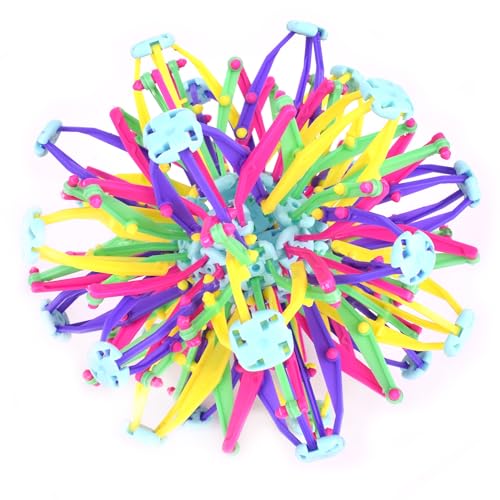
The Expandable Ball offers a sensory-rich, portable option for hands-on play. It expands from 5.5 inches to 10 inches, providing both a tactile and visual stimulus that can support focus and stress relief. While not a direct literacy tool, activities like breath control, finger tracing, and interactive play can calm anxious moments, making learners with dyslexia more receptive to reading practice. Its portability makes it easy to incorporate into classrooms or homes for on-the-go sensory breaks.
Buying Guide
Key purchase considerations for dyslexia-focused toys include how the product supports phonemic awareness, decoding, and language confidence. Look for multisensory features that combine auditory, visual, and kinesthetic learning. Consider age appropriateness and whether the tool scales with a child’s advancing literacy skills.
- Phonemic Awareness: Toys that emphasize sound-letter relationships and phoneme discrimination tend to benefit early readers most. Look for activities that require sound-by-sound decoding and feedback on pronunciation.
- Word-Building and Decoding: Tools with hands-on manipulation of letters or word parts (like rods or phoneme phones) help reinforce decoding strategies and memory for common sound patterns.
- Progressive Difficulty: Choose products with adjustable challenge levels to match a child’s growth, reducing frustration and promoting steady improvement.
- Engagement and Accessibility: Toys should be engaging yet accessible, with clear instructions and durable design. Consider devices that combine familiar play patterns with educational goals to maintain motivation.
- Multisensory Balance: A balanced mix of auditory feedback, visual cues, and tactile interaction supports diverse learning preferences common among dyslexic learners.
For best results, combine these toys with structured reading activities, explicit phonics instruction, and regular practice. Observing a child’s response to different modalities can help tailor a literacy plan that leverages strengths while addressing areas needing support.