Delay pedals can add depth and space to guitar tones without taking over your signal chain. The following five compact delay pedals deliver warm analog repeats, clear true-bypass tone, and versatile controls suitable for small pedalboards. Each entry highlights key features to help you compare quickly and make an informed choice for practice, live play, or studio work.
| Product | Key Strength | Typical Use |
|---|---|---|
| Donner Guitar Delay Pedal | Warm analog sound; compact build | Analog warmth for classic tones |
| POGOLAB Delay Pedal | Adjustable TIME and Mix; true bypass | Versatile delay with clear signal |
| MXR Carbon Copy Mini | 600 ms delay; modulation switch | Iconic, flexible analog delay |
| JOYO Digital Delay (JF-08) | Analog-modeled digital delay; true bypass | Accessible option with modern features |
| FLAMMA FC03 Delay Pedal | Three modes: Analog, Real Echo, Tape Echo | Wide palette: analog warmth, tape vibe |
Below are five hand-picked small delay pedals that cover a range of sonic textures, from warm analog repeats to layered digital emulations. Each section includes a short overview, key controls, and how it might fit into different playing contexts.
Donner Analogue Delay Pedal

The Donner Delay Pedal delivers a warm, vintage-voiced analog delay that fits compact pedalboards easily. With delay times spanning from 20 ms to 620 ms, players can craft everything from slapback to longer ambient echoes. A dedicated delay level control and feedback allow precise shaping of repeats. The aluminum-alloy chassis keeps the unit sturdy for gigging and travel. This pedal is ideal for players seeking a classic delay texture without bulk.
POGOLAB Delay Pedal

The Pogolab Delay Pedal emphasizes analog warmth with adjustable TIME and a Mix control to balance wet and dry signals. It is a compact, aluminum-alloy unit designed for durability. The pedal’s indicator light helps users confirm operation at a glance. This option suits players who want more expressive control over delay time and exact wet/dry balance to sit within guitar and amp tones.
MXR Carbon Copy Mini Analog Delay

The MXR Carbon Copy Mini brings a compact form with a robust 600 ms delay and a modulation switch, adding a touch of extra character to repeats. This mini analog delay is known for dependable true bypass operation and a bright, clear tone that stacks well with overdrive or fuzz. It’s a staple for players chasing a classic, lush echo without sacrificing space on the pedalboard.
JOYO Digital Delay (JF-08)

The JOYO JF-08 blends digital ingenuity with an analog-delayed flavor. It covers a wide 25 ms to 600 ms range, offering a versatile palette for leads and rhythm work. True bypass helps preserve your core tone when the pedal is off, while the aluminum housing provides durability. Combining this pedal with overdrives and amps can yield expansive, modern delay textures without heavy footprint.
FLAMMA FC03 Delay Pedal
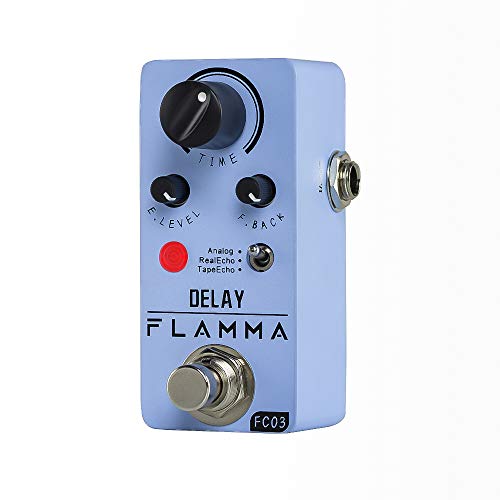
The FLAMMA FC03 provides three delay modes—Analog Delay, Real Echo, and Tape Echo—for a broad sonic range. Delay times span from 5 ms to 600 ms, with a flexible mix and feedback to tailor the effect. True bypass ensures that engaging or bypassing the pedal leaves your guitar signal unaffected, preserving natural tone when not in use. This pedal is well-suited for players who want multiple delay textures in one compact unit.
Buying Guide: Key Considerations for Small Delay Pedals
- Sonic character: Analog delays tend to sound warmer with natural repeats, while digital models can emulate vintage tape and modern echo effects. Choose based on whether you prefer vintage warmth or crisp, flexible repeats.
- Delay time range: A broader range (roughly 5 ms to 600–620 ms) covers slapback to long ambient trails. For live versatility, look for models offering both short and long settings.
- Controls and layout: Look for intuitive knobs like Time, Mix, and Feedback. A dedicated Tone or Modulation control can add texture without clutter.
- Bypass quality: True bypass minimizes tone loss when the pedal is off. A robust enclosure and reliable jacks help on busy boards.
- Signal integrity: Aluminum or metal enclosures aid durability. Noise reduction features, especially in analog circuits, help maintain a clean tone when playing at high gain.
- Footprint and mounting: For small boards, compact pedals with standard 9V DC power and standard dimensions optimize space. Consider daisy-chaining and power requirements to avoid hum.
- Pedalboard integration: Some pedals offer true bypass with compact footprints; others provide extra features like Mix or Tap Tempo for time-based performances. Decide which features align with your playing style.
- Maintenance: Analog delay circuits can drift slightly over time; some units include easier access to battery compartments or power options for field repairs.
- Live vs studio use: Short delays for punchy rhythms work well on stage; longer delays with tap tempo shine in studio layering and ambient passages.
These considerations help players compare the 5 selected models and determine which aligns with their preferred tone, control scheme, and performance setting. The chosen pedals emphasize compact design, reliable bypass, and versatile delay ranges, making them practical for American guitarists building a small but powerful effects chain.