Choosing the right RC plane transmitter is essential for reliable, interference-free control across fixed-wing aircraft, gliders, and multi-rotor platforms. This guide highlights five popular 2.4 GHz systems known for solid performance, easy binding, and multi-channel capabilities. Each entry includes key features to help you compare range, binding security, and telemetry options for safer, more precise flight control.
Summary of chosen products
| Brand | Model | Channels | Key Strengths | Typical Use |
|---|---|---|---|---|
| DTXMX | FS-i6 / FS-iA6 Compatible Transmitter (Model_2) | 6 | AFHDS 2A, 500 m range, versatile with gliders/helicopters | Fixed-wing, quad, DIY builds |
| FLYSKY | FS-i6 (Mode_2) | 6 | Unique ID pairing, strong anti-interference | Planes, quads, DIY aircraft |
| FLYSKY | FS-i6X | 6-10 | 8–10 channels, i-BUS, bidirectional data | RC boats, drones, planes |
| Radiolink | T8FB | 8 | 67-channel FHSS, long-range up to 2 km (control), Bluetooth APP | Airplanes, boats, cars |
| Radiolink | AT10II | 12 | Telemetry, voltage monitoring, 2.5 mile range | Planes, FPV, multi-vehicle setups |
DTXMX FS-i6 RC Transmitter and Receiver (Model_2)
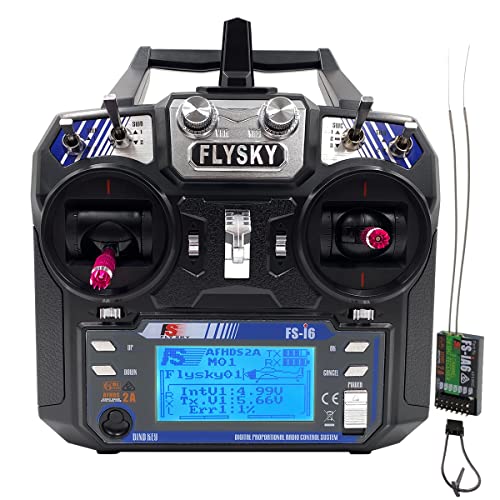
The DTXMX FS-i6 family offers AFHDS 2A reliability with a stated 500-meter air distance. It supports fixed-wing aircraft, gliders, helicopters, and is compatible with RC cars and boats in some setups. This transmitter emphasizes quick response and anti-interference performance essential for busy fields or multi-vehicle environments. It is designed to work with multiple AFHDS 2A receivers in the FS-iA6 series, making it a flexible option for DIY projects that require a stable control link.
Key considerations: Stable 2.4 GHz connection, compatibility with FS-iA6-series receivers, and the ability to manage different aircraft types. Users should verify that optional receivers are purchased separately if needed for a specific model.
FLYSKY FS-i6 (Mode_2) With FS-iA6 Receiver

This Flysky pair is well-known for reliable 2.4 GHz AFHDS 2A operation and a unique ID binding system. Once bound, the transmitter and receiver pair exclusively communicate, reducing cross-system interference in shared airspace. The system is suitable for beginners and seasoned builders alike, supporting a range of aircraft types from planes to quadcopters. It is widely supported in the RC hobby, with an established ecosystem of compatible receivers.
Considerations include ensuring you have the correct mode (Mode_2 in many markets) and recognizing that you may want to upgrade to higher-channel options if you add more sensors or additional channels for advanced flight profiles.
FLYSKY FS-i6X 10CH Transmitter with FS-iA6B Receiver
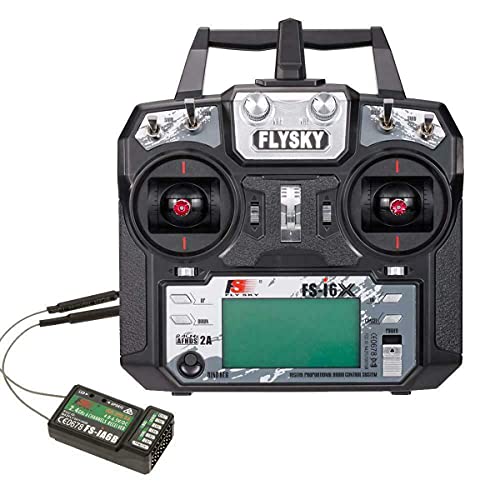
The FS-i6X adds optional expansion to 10 channels, providing multi-channel support for more complex aircraft setups and sensors. It supports bidirectional communication, including data from sensors like temperature and altitude, and features i-BUS support for advanced servo calibration. The system uses multi-channel hopping across a wide band to minimize interference, making it suitable for active flying environments with nearby transmitters.
For users, the main trade-offs are price versus channel count and whether the higher channel density is necessary for your model. The i6X continues the FS-i6 family’s reputation for reliability and ease of use.
GoolRC FS-i4 4CH Transmitter With Receiver FS-A6

The GoolRC FS-i4 provides an affordable 4-channel option with 2.4 GHz AFHDS 2A operation. It ships with a 6-channel mini receiver that fits compact RC vehicles, making it a practical entry-level choice for hobbyists focusing on simple builds or smaller planes. The automatic frequency hopping system adds a layer of reliability, helping maintain a strong link even in environments with multiple transmitters nearby.
Ideal for beginners, this option balances cost and performance, though it offers fewer channels than higher-end models. It’s a solid stepping stone for hobbyists who want to learn user setup and basic flight control without a large upfront investment.
Radiolink T8FB 8 Channels Transmitter with R8EF Receiver

The T8FB offers eight channels and a dual-rate switch, with features like EPA, training mode, and simulator compatibility. It supports wireless APP setup via Bluetooth, enabling quick parameter adjustments, fail-safes, and channel mixing. The FHSS 67-channel system helps resist interference, and the advertised range of up to 2 km makes it suitable for mid-to-long-range flight experiments and FPV flying when paired with an appropriate receiver.
Buyers should consider whether you plan to use the Bluetooth app for frequent parameter tweaks and whether you need additional receivers or telemetry components to extend its functionality across multiple models.
Radiolink AT10II 12 Channels with R12DS Receiver

The AT10II stands out with 12 channels and integrated telemetry, including voltage and RSSI readouts. It supports voltage telemetry via compatible modules and flight controllers, enabling real-time checks of battery status during flight. The system uses robust DSSS and FHSS with a 4 km theoretical range in air, and it accommodates a variety of platforms: airplanes, FPV drones, quads, helicopters, cars, and boats. It is well-suited for more complex setups requiring multiple actuators and sensors.
When evaluating the AT10II, consider how you will leverage telemetry for safe operation, the availability of compatible modules for telemetry, and whether you need the extended channel count to support future models or add-ons.
Buying Guide: Key Purchase Considerations and Comparisons
Channel count and mode compatibility are primary considerations. If you fly planes or gliders, a 6-channel system may suffice, but if you’re adding multiple servos or telemetry sensors, higher-channel options like 8–12 channels provide greater headroom. Confirm the mode (Mode_2 is common in the U.S.) and ensure receivers you plan to use are compatible with the transmitter.
Interference resistance and binding security are critical in busy flying fields. Systems with unique IDs and paired bindings (one-to-one) help prevent cross-talk between transmitters. FHSS or DSSS technologies improve resilience in mixed environments. Consider family ecosystems: some brands offer seamless integration with multiple receivers and telemetry modules, which simplifies upgrades as your builds grow.
Telemetry capabilities are increasingly valuable for safer flights. Transmitters with built-in voltage or RSSI telemetry, or the ability to pair with telemetry modules, enable real-time status monitoring. This is especially relevant for FPV flights and longer-range missions where mid-flight failures carry higher risk.
App compatibility and ease of setup can save time. Bluetooth-enabled transmitters or PC/app-based configuration tools speed parameter tuning, failsafe settings, and model storage. If you plan to manage several models, a transmitter with robust model memory and easy model switching is advantageous.
Hardware quality and ergonomics matter for comfort during long sessions. Look for grip texture, button layout, and overall weight. A well-built transmitter reduces fatigue and helps maintain steady control during extended flights. If you’re a beginner, choose a unit with clear binding instructions and wide user support in communities or official documentation.
Price-to-performance balance is another factor. Budget options like 4–6 channel systems are accessible for beginners, while 8–12 channel transmitters with telemetry and advanced features suit serious hobbyists and hobbyists expanding to complex aircraft. Always verify what is included in the package (transmitter, receiver, cables, and any required modules) to avoid surprises after purchase.
Finally, consider future-proofing. If you expect to upgrade to larger or more capable aircraft, opting for a transmitter with higher potential channel counts, reliable telemetry, and a broad ecosystem can reduce the need for frequent upgrades.