If you’re searching for a ready-to-fly (RTF) RC airplane that’s approachable for beginners yet capable enough to keep seasoned flyers engaged, you’ve landed in the right place. The following selections prioritize stability, simple controls, durable materials, and solid flight times. Each model below is ready to fly with minimal setup, includes multiple takeoff options, and features LED lighting or stability systems to enhance training and fun. Whether you’re shopping for a kid, a new hobbyist, or a thrill-seeker, these options deliver dependable performance right out of the box.
Summary at a glance: the chosen models span lightweight foam airframes, gyro stabilization, and easy handling. They offer a mix of two-channel and four-channel control schemes, multiple takeoff modes, and flight times that accommodate extended practice. The list focuses on beginner-friendly builds with practical safeguards like propeller savers and built-in stabilizers, ensuring safer learning and dependable missions in open spaces. Below, explore five top picks with quick links to each product page.
| Product | Brand | Flight Features | Takeoff Modes |
|---|---|---|---|
| TOIBUS RC Plane | TOIBUS | 2 batteries, 6-axis gyro, LED lights | Ground and Hand Launch |
| LEAMBE P51 Mustang | LEAMBE | 3 control modes, propeller saver tech | Ground Takeoff |
| AIGIMU Globemaster III | AIGIMU | 6-axis gyro, realistic scale, dual motors | Hand Throw or Glide Takeoff |
| HAWK’S WORK Blue Glider | HAWK’S WORK | Self-stabilization, 2.4GHz, 4-direction control | Ground/Taxi Takeoff |
| Fremego SU27 | Fremego | LED lights, 2 batteries, 6-axis gyro | Ground/Hand Launch |
TOIBUS RC Plane: Ready-To-Fly F-22 Glider
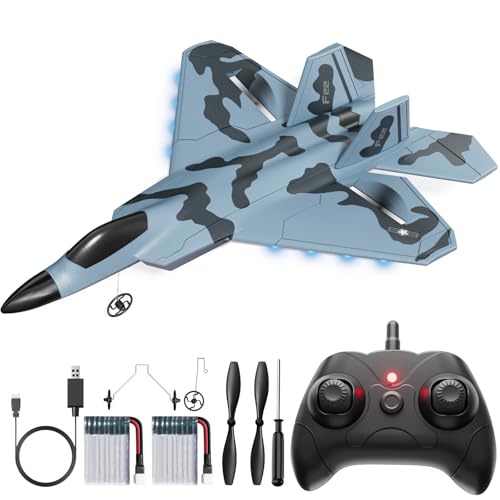
The TOIBUS F-22 inspired RC plane is a lightweight EPP foam model designed for kids and beginners. It includes bright LED lights for nighttime flights and two rechargeable batteries, offering up to about 30 minutes of flight time (15 minutes per battery). The aircraft uses a 6-gyro stabilization system to maintain balance, helping new pilots learn with confidence. It supports both ground takeoff and hand-launch, making it versatile for different flying environments. The propulsion and controls provide a balance of speed and stability for early flight practice.
LEAMBE P51 Mustang RC Plane: Beginner Friendly

The LEAMBE 4-Channel P51 Mustang RC plane emphasizes stability and ease of use for beginners. Built from lightweight elastomer foam, the aircraft is easy to fly in outdoor spaces and features three control modes—Beginner, Intermediate, and Experienced. A propeller saver technology helps protect the propeller and airframe from common beginner mishaps. The design makes for forgiving takeoffs and steady flights while allowing gradual skill development as pilots gain confidence.
AIGIMU C-17 Globemaster III RC Plane

The AIGIMU C-17 Globemaster III RC airplane blends realism with training-friendly features. It’s a Ready-to-Fly model with two strong motors and a 6-axis stabilization system, designed for smooth takeoffs and controlled landings. The option to hand-launch or glide-takeoff caters to different training preferences, while the authentic scale appearance adds excitement for aviation enthusiasts. This model aims to balance realism with approachable handling for beginners who want a more impressive and capable RC airplane experience.
HAWK’S WORK Blue Glider: 2-Channel Beginner Plane

This 2-channel RC plane from HAWK’S WORK focuses on straightforward operation and learning-friendly design. It features a built-in stabilization system and supports basic 4-direction control. The design fosters quick confidence for first-time pilots, while its durable foam construction helps absorb minor crashes. The 2.4GHz radio system ensures reliable control, and multiple planes can fly together without interference, enhancing a beginner-friendly flying group experience.
Fremego SU27 RC Plane: Night Flight Ready

The Fremego SU27 RC plane delivers two batteries, a 6-axis gyro, and LED lighting suitable for dusk or night flights. The two-channel operation keeps training simple, while the night-illumination features add visual appeal and orientation cues during low-light sessions. The durable airframe and robust control system help beginners practice steady controllability, with enough responsiveness to keep more advanced pilots engaged during practice sessions too.
Buying Guide: Key Considerations For Your Next Ready-To-Fly RC Plane
- Experience level and learning curve: Look for models with stabilization systems and adjustable flight modes to accommodate beginners and allow growth as skills improve.
- Durability and materials: Foam airframes like EPP foam are common for their light weight and impact resistance, which reduce damage from crashes during the learning phase.
- Stability features: Gyro stabilization, propeller savers, and automatic balance assist in maintaining straight flight and easier turning, which is crucial for early pilots.
- Takeoff options: Ground takeoff and hand-launch capabilities provide flexibility in different environments. Some planes offer taxi takeoff for smoother starts on flat surfaces.
- Flight time and power: Consider models offering 15–30 minutes per battery or more, with multiple batteries included for extended practice. Ensure the motor power supports easy takeoff and steady climbs without overwhelming the learner.
- Control range and systems: A 2.4GHz remote is standard and reliable; some models have dual motors or multi-mode control to broaden the flight envelope and capabilities.
- Expansion and age range: Some airplanes are marketed for kids, while others target adults or beginners. Check the recommended age and ensure the product aligns with the user’s skill level and interest.
- Maintenance and spare parts: Look for models with readily available replacement parts and simple maintenance procedures, especially for propellers and wheels.
- Portability and storage: Lightweight foam planes are easy to transport and store, enabling frequent practice sessions in parks, backyards, or gyms.
- Safety considerations: Follow local regulations for flying RC aircraft and supervise younger pilots. Use safe flying spaces away from crowds and obstacles.
The selections above provide a spectrum of beginner-friendly options while keeping pathways open for growth into more advanced aerobatics and scale-inspired maneuvers. Each model balances stability, ease of use, and engaging features to support consistent practice and enjoyment. When choosing, consider your intended use, typical flying environment, and how important elements like night flight capability or multi-mode control are to your learning journey.