For parents seeking musical stimulation for infants and toddlers, piano-themed toys offer a playful path to early rhythm, color recognition, and fine motor skills. This guide highlights five highly reviewable options that emphasize safety, age-appropriate design, and engaging sounds. Each product encourages little hands to explore notes, melodies, and movement—without the need for formal instruction. Read on to compare features and find the best fit for your child’s early learning journey.
| Product | Brand | Why It Stands Out |
|---|---|---|
| B. toys – Wooden Toy Piano for Toddlers | B. toys | Color-coded keys, songbook, and 25-key setup for early musical exploration. |
| Baby Einstein and Hape Magic Touch Piano | Baby Einstein | Touch-activated music with Montessori-inspired play and color-coded notes. |
| Oprala 2 in 1 Baby Piano Xylophone | Oprala | Two-in-one design for piano keys and xylophone bars with safety features. |
| WITALENT Baby Piano Toy | WITALENT | Light-up, color-filled design with learning and music modes for ages 6–12 months+ |
| Basytodio Baby DJ Table | Basytodio | Multi-mode musical table with 24 keys, lights, and sounds to boost exploration |
These picks prioritize safety, intuitive play, and room for growth as your child’s musical curiosity deepens. Each item is suitable for early developmental stages, while offering enough variation to keep playtime fresh and educational.
B. Toys Wooden Toy Piano for Toddlers

The B. Toys wooden piano features 25 color-coded keys across two octaves and a Music button that plays classical pieces. The color-coded notes A-to-G help reinforce early music theory in a tactile way, while the included illustrated songbook provides structured playtime. This instrument is designed for toddlers aged 3 and up, encouraging creative exploration and early rhythm practice in a durable wooden frame.
Baby Einstein Magic Touch Piano
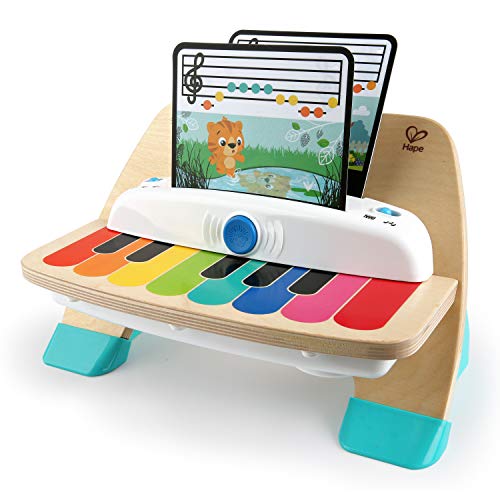
This toy uses touch-responsive magic to create music, fostering sensory exploration and early cause-and-effect learning. It includes sheets or prompts to guide play, with color-coded notes that align with the keys. Volume control helps tailor the environment, ensuring comfortable listening for parents and babies. The design emphasizes Montessori-inspired learning through simple, intuitive interaction and clear, engaging sounds as babies tap the keys.
Oprala 2 in 1 Baby Piano Xylophone

This 2-in-1 set combines a colorful keyboard with a back-side xylophone, offering varied tactile experiences. Each bar and key is vividly colored to aid distinction, and the set includes small hammers for added interaction. Made with non-toxic materials and smooth edges, it prioritizes safety for teething infants while promoting hand-eye coordination and early music perception as kids press keys or strike bars to create melodies.
WITALENT Baby Piano Toy

The WITALENT elephant-themed piano toy is designed for babies aged 6 to 12 months and older, featuring a light-up display and multiple modes to support sensory development. The toy offers a Learning mode—covering numbers, instrument sounds, and animal noises—and a Music mode to build cognitive scales through friendly melodies. A volume control helps protect little ears, while the sturdy ABS-plastic construction ensures lasting play experiences even during teething phases.
Basytodio Baby DJ Table
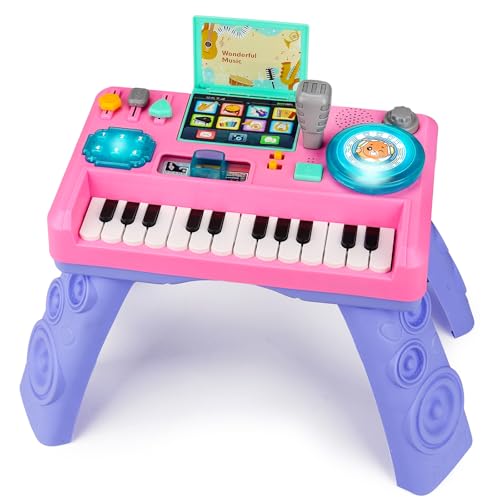
This interactive table blends a DJ-style turntable, piano keys, and 8 instrument sounds with 24 piano keys for diverse sound exploration. It features multiple play modes, volume control, and a recording option to preserve child-created music. Its bright design and responsive sounds promote fine motor skills, auditory development, and an early appreciation for rhythm and sequencing as kids press keys, flip panels, or simulate DJ-style mixing.
Buying Guide: Key Purchase Considerations
When selecting a piano toy for babies, consider safety, age appropriateness, and cognitive development. Look for non-toxic materials, rounded edges, and sturdy construction that withstands rough play. A broader age range can extend play value, but ensure the toy’s features align with your child’s developmental milestones—touch or light-up functions for younger babies, and more complex note-reading or songbooks for toddlers. Texture, color variety, and sound variety support sensory development, color recognition, and motor skills.
Other important aspects include volume controls to protect hearing, easy-clean surfaces, and portability for on-the-go use. If you’re unsure which features matter most, prioritize multi-mode toys that combine music, light, and interactive elements, as these typically adapt well from infancy into early toddler years. Compare products by key traits such as number of keys, whether notes are color-coded, and whether there is a songbook or guided play material. Safety certifications or parent reviews can also provide insight into real-world durability and kid-friendliness.
Durability and upkeep are practical constraints. Wooden toys tend to endure longer and feel sturdier, while plastic options may offer more vibrant colors and lighter weight. Consider storage needs as well; some models include built-in compartments or easy disassembly for quick cleaning. Finally, assess how the toy encourages interactive play with caregivers or siblings, which can enhance language development and social skills alongside musical exploration.