Off road electric longboards blend rugged construction with high-performance motors to conquer dirt trails, gravel, and steep grades. The following selections highlight boards designed for serious hill climbs, long-range cruising, and dependable all-terrain handling. Read on to compare top specifications, build quality, and practical uses across the best options for adult riders and adventure-seekers.
| Product | Brand | Top Speed | Real-World Range | Notable Feature |
|---|---|---|---|---|
| MeePo Bamboo Series Off-Road | Meepo | 28–32 mph (approx. 45–52 km/h) | 25–40+ miles | Dual 1800W motors; 42″ maple + carbon deck |
| Uditer S3 Electric (2 Battery Version) | UDITER | 28 mph | 20–26 miles with two 218Wh batteries | Dual 600W motors; swappable battery system |
| isinwheel V8 | isinwheel | 28–30 mph | Noted up to 30 miles (depending on conditions) | Removable batteries; dual-wheel brushless motors |
| Exway Atlas Pro 4WD | EXWAY | 37 mph | Up to 38 km (approx. 24 miles) | Quad motor option; IP55 waterproof |
| Exway Atlas Pro (Gear) V2 | EXWAY | 37 mph | Up to 38 km (approx. 24 miles) | 4WD modular power; carbon fiber unibody |
Note: Specifications are based on listed product features and typical rider conditions. Range and top speed can vary with rider weight, terrain, weather, and riding style.
Meepo Bamboo Series Off-Road All Terrain Board

The Meepo Bamboo Series combines a long 42″ deck made from Canadian maple with carbon fiber reinforcement and rugged 8″ pneumatic tires. Dual 1800W motors provide solid hillside capability, enabling climbs up to 15° and confident acceleration. A removable 10Ah battery supports a real-world range around 25 miles or more under favorable conditions, making it suitable for daily commutes and weekend adventures alike. The board is designed to absorb shocks and maintain balance on rough surfaces, helping riders stay in control on dirt trails and uneven pavement.
Key considerations include weight capacity and battery swapability for extended trips, alongside 28–32 mph top speed. Riders should assess terrain, tire pressure, and protective gear requirements for off-road use.
Uditer S3 Electric Skateboard With Dual Battery
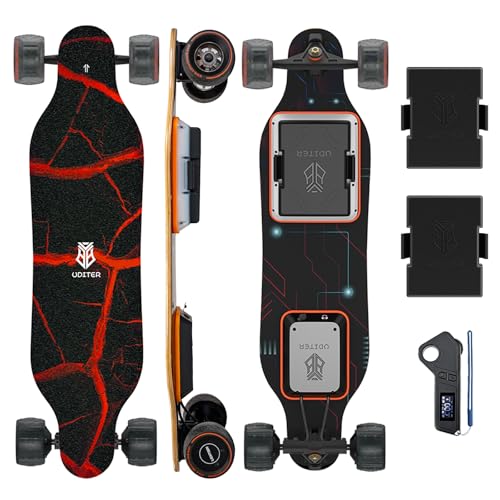
The S3 model emphasizes range via two swappable 218Wh batteries, enabling a total of roughly 20–26 miles per charge with both packs. Dual 600W hub motors deliver up to about 28 mph and enable sustained climbs up to 30 degrees. The quick-swap battery system allows riders to swap in a charged pack quickly, keeping momentum for long rides. Dual charging ports accelerate recharging, with significantly shorter downtime when using two chargers. The platform targets long-distance commuting and off-road exploration with a balance of speed, range, and modular capability.
Riders should consider the added weight of dual batteries and compatibility with additional chargers. The swappable design is a strong selling point for those who plan extended outings away from frequent charging opportunities.
isinwheel V8 Electric Skateboard

The isinwheel V8 emphasizes removable batteries for extended range and easy upgrades. With dual 600W motors, riders can reach near 30 mph and address hills and varied terrain with confidence. The design supports a fast start and sport modes beyond a basic cruising profile, and the ambient lights enhance visibility in low light conditions. The detachable battery approach can simplify maintenance and allow riders to adapt to longer trips by swapping or upgrading packs as needed.
Performance considerations include the weight the deck supports, the reliability of battery connections, and the transfer between on-road and off-road surfaces. The V8 suits riders seeking a blend of speed, modularity, and style for urban-to-trail transitions.
Exway Atlas Pro 4WD All Terrain

The Atlas Pro 4WD offers a powerful, modular power system with a top speed around 37 mph and a potential range up to 24 miles, backed by a robust carbon fiber unibody deck. The 701Wh battery helps deliver consistent performance across varied terrain and ride profiles. A flexible drive setup allows riders to switch between dual-motor and quad-motor configurations, letting the board adapt to lighter daily use or demanding off-road sections. The IP55 waterproof rating contributes to resilience in damp conditions, and the ergonomic remote provides precise control as you carve through uneven surfaces.
Practical considerations include the balance between wheel size, deck stiffness, and rider weight. Maintenance access to the battery and motor modules is another factor for riders who push boards on rugged trails.
Exway Atlas Pro Gear V2 4WD

The Atlas Pro Gear V2 emphasizes a modular, high-performance design with 4WD capability for tackling rugged terrain. A top speed near 37 mph and a similar range figure to other Atlas models place this board in the upper tier for all-terrain commuting and adventure riding. The carbon fiber unibody deck balances stiffness and weight, enabling precise carving while withstanding rough paths. The quad-motor option ensures rapid acceleration and the power needed to surmount challenging gradients. As with other high-performance boards, riders should monitor battery health and remote reliability over time.
Considerations here include portability versus power, remote responsiveness, and the maintainability of a multi-motor setup on off-road routes.
Buying Guide: Key Purchase Considerations
All-terrain electric longboards demand a careful balance of power, range, durability, and ride comfort. When evaluating options, consider:
- Motor power and drivetrain: Dual versus quad motors affect hill-climbing ability, acceleration, and overall torque. Higher wattage helps conquer rough terrain, but also adds weight.
- Battery capacity and swap options: Larger batteries extend range, while swappable packs offer continuous riding without waiting on recharge. Consider the availability and cost of extra packs or dual-port charging.
- Deck and trucks: A longer, stiffer deck plus reinforced trucks improve stability on rough surfaces. Materials like carbon fiber or composite blends can impact durability and weight.
- Tire choice and clearance: Pneumatic off-road tires absorb shocks but require pressure maintenance. Tire width and diameter influence grip and the board’s ability to roll over obstacles.
- Water resistance and weather tolerance: IP ratings and seal quality matter for damp, muddy, or wet environments. Off-road boards benefit from weather-sealed electronics and robust enclosures.
- Weight capacity and rider ergonomics: Ensure the board supports rider weight with margin for gear. Inspect battery placement, handle design, and balance during dynamic riding.
- Portability and maintenance: Higher-end boards with modular components may require more upkeep but can offer easier upgrades. Check serviceability of wheels, brakes, and electronics.
- Intended use: Distinguish between casual off-road exploration, long-distance off-road commutes, and technical trail riding to match features with your needs.
Durability, warranty coverage, and user reviews provide practical insight beyond specifications. For riders prioritizing long-range capability, swappable batteries and dual vs. quad-motor configurations offer meaningful trade-offs in cost, maintenance, and performance. Safety gear and a proper riding technique are essential when exploring rugged terrains.