For aspiring rocketeers and budding photographers, a model rocket camera kit combines hands-on aerospace building with in-flight video and data collection. This guide highlights five top picks that fit a range of skills and budgets, from beginner-friendly launch sets to advanced flight-monitoring add-ons. Each option is designed to minimize impact on flight performance while delivering engaging footage or precise altitude data to enhance learning and experimentation.
Summary of selected products:
| Product | Brand | What It Does | Key Benefit |
|---|---|---|---|
| Estes 2208 Universal Astrocam HD Rocket Camera and Holder | Estes Store | Camera and holder for tracking flights | Clear aerial footage with lightweight design |
| Estes 2246 Altimeter, Model Rocket Altitude-Measuring Device | Estes Store | Altitude data with LCD readout | Precise flight height records for analysis |
| Estes 7287 Sidekick Rocket-Building Kit | Estes Store | Dual-body advanced building kit | Thrilling flights with a complex build |
| Playz Premium Solar System Model Kit | Playz Store | Hands-on space model with motor and projector | Engaging STEM project with planet display |
| Estes 1469 Tandem X Rocket Launch Set | Estes Store | Two-model launch set with launch pad | Diverse flight experiences and learning |
Estes 2208 Universal Astrocam HD Rocket Camera and Holder

The 2208 Astrocam HD is a compact launch camera designed to ride on standard Estes rockets with minimal impact on trajectory. It attaches securely to the rocket frame using two straps and a lightweight holder, preserving balance while delivering high-quality video and audio from the ascent. A chrome finish helps visibility in flight, and glare protection is provided by a dedicated hood. Compatibility with USB access on a computer makes transferring footage straightforward for post-flight analysis or sharing highlights.
Key considerations: The kit emphasizes ease of use and quick setup, which suits first-time builders as well as seasoned flyers who want to add flight footage without sacrificing performance. The camera’s compact profile reduces drag, while the hold-fast straps ensure a stable mount during launch and recovery. Data handling is simple, with straightforward video capture and file management after landing.
Estes 2246 Altimeter, Model Rocket Altitude-Measuring Device
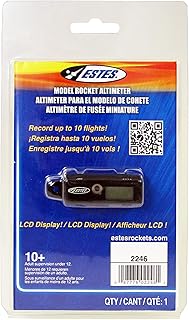
The 2246 Altimeter is a lightweight electronic tool that records altitude from the payload after liftoff. It uses a small LCD display to show readings in both feet and meters, with a maximum range approaching 9,999 ft. The device stores data for up to ten flights, which makes it ideal for tracking performance across multiple launches and testing how design tweaks affect altitude. It operates using a replaceable alkaline battery, supporting longer flying sessions during school projects or hobby weekends.
Key considerations: Altitude data provides a quantitative way to compare rocket configurations, fins, mass distribution, and engine choices. The compact form factor ensures it fits inside payload sections or other compact compartments. Hobbyists may pair this with a camera for synchronized flight and data insights, enhancing STEM learning outcomes without adding heavy payload weight.
Estes 7287 Sidekick Rocket-Building Kit

The 7287 Sidekick is an advanced dual-body model designed for ages 10 and up. The kit includes two fuselages, design decals, recovery streamers, and clear assembly instructions. It requires separate engines, starters, recovery wadding, a launch pad, and batteries. The twin-fuselage design can reach approximately 700 ft with appropriate engine power, and it is compatible with various engine types when paired with suitable components. This kit offers a rewarding building challenge and hands-on launch experience for more experienced hobbyists.
Key considerations: This is a more intricate project, suitable for those who enjoy precise building and aerodynamic experimentation. Builders can experiment with engine choices and configurations to achieve different flight profiles. The storyline of a dual-body craft adds an extra layer of planning and testing compared to simpler kits, making it a strong pick for STEM projects and group activities.
Playz Premium Solar System Model Kit
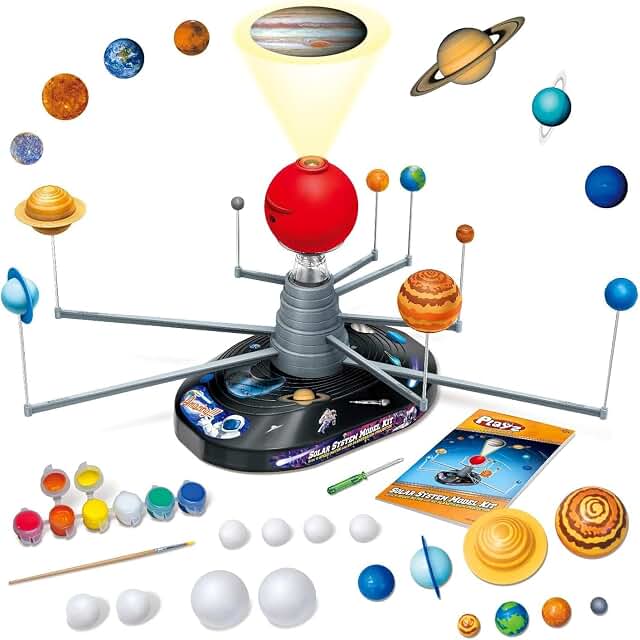
The Playz Solar System Model Kit is a hands-on space-themed project featuring a 4-speed orbit motor, a large 26″ x 18″ x 11″ assembled model, and a complete set of painted planets plus white foam balls. The included paint set and instructional manual provide a comprehensive STEM experience that blends astronomy with practical engineering. This kit emphasizes creative display and classroom-ready presentation, making it ideal for science fairs or home science corners.
Key considerations: While not a traditional rocket kit, this option expands the concept of space exploration beyond propulsion. It enables kids to learn planetary order, orbital mechanics basics, and data presentation through a tangible, interactive model. It also supports teamwork and project-based learning when used as a classroom or family activity.
Estes 1469 Tandem X Rocket Launch Set

The 1469 Tandem X is a beginner-friendly launch set that features two rockets, the 30-inch Amazon model and a 15.6-inch Crossfire ISX model, designed to offer varied flight experiences. This bundle includes a launch pad system and requires engines, starters, recovery wadding, and batteries (sold separately). The two models deliver distinct altitude capabilities, with the larger Amazon model capable of substantial height using a C-series engine, while the Crossfire ISX provides a separate, lighter option for different flight profiles. It is a versatile introduction to model rocketry and flight planning.
Key considerations: This set is ideal for schools, clubs, or families seeking multiple launch scenarios without purchasing separate kits. The Tandem X introduces learners to differences in scale, thrust, and recovery strategies, facilitating comparative experiments and robust discussions about rocketry fundamentals.
Buying Guide: Key Purchase Considerations And Comparisons
- Flight objective: If you want high-quality flight footage, choose a camera-equipped option like the Estes 2208. For altitude data, the Estes 2246 Altimeter provides precise readings. For a broader learning experience, consider the Tandem X set or the Sidekick kit for building complexity and varied flights.
- Payload and weight: Heavier payloads affect stability and altitude. Lightweight camera solutions minimize drag and preserve flight performance, while heavier sensors may require larger airframes or engine adjustments.
- Ease of use: Beginners benefit from preassembled sets and guided instructions. Advanced builders may prefer kits with custom parts or dual-body designs that require more time and skill to assemble.
- Data integration: If you plan to analyze flights, choose devices with easy data extraction (video footage, LCD altitude readouts, or data storage capabilities) and consider how you’ll organize and review results.
- Safety and compliance: Use appropriate recovery systems, select compatible engines, and follow local regulations regarding model rocket launches. Ensure you have a suitable launch area and adult supervision where required.
- Educational value: Packages that combine theory with hands-on practice (such as the Solar System Kit) can enrich STEM education beyond propulsion alone, supporting cross-curricular learning in science and engineering.
- Expandability: If you anticipate ongoing projects, look for kits that offer upgrade paths (additional cameras, altimeter modules, or compatible launch pads) to extend your hobby over time.