Discover top model airplane kits that actually fly, spanning powered planes, rubber-powered gliders, and smartphone-controlled builds. This guide highlights options that balance ease of use with learning value, helping beginners and enthusiasts compare how each kit performs in real-world flight.
The table below summarizes the five selected products, including their type, ideal user, and standout features.
| Product | Type / Best For | Key Features |
|---|---|---|
| POWERUP 4.0 The Next-Generation Smartphone Controlled Paper Airplane Kit | Smartphone-controlled paper plane with autopilot | Bluetooth control, autopilot, wind stabilizer, app connectivity |
| Paper Airplane Kit (Publications International, Ltd.) | Beginner friendly paper plane designs | Variety of designs like airplanes, UFOs, space shuttles |
| InAir E-Z Build B-17 Flying Fortress Model Kit (Red) | Highly detailed plastic model for display and mock flights | 10-minute build, includes stand |
| Guillow’s Piper Super Cub 95 Laser Cut Model Kit | Laser-cut balsa wood kit for scale modeling | 24″ wingspan, decals, optional power choices |
| Barsha Space 5-Pack Balsa Wood Airplane Glider Kits | Outdoor gliders for kids and families | No tools needed, easy assembly, long flights |
POWERUP 4.0 The Next-Gen Smartphone Controlled Paper Airplane

The POWERUP 4.0 system lets users transform a folded sheet of paper into a controllable aircraft. The onboard computer and Bluetooth module enable autopilot features and precise control via a companion app. An integrated wind stabilizer and launch assist improve stability, making complex maneuvers more accessible for hobbyists, students, and tinkerers. The kit emphasizes connected flying, flight logging, and competing on leaderboards as users fold and fly multiple designs.
Key features include: autopilot control, gyroscopic stabilization, launch assist, wind stabilization, and a dedicated app that supports flight logging and design exploration. The setup invites experimentation with loops, rolls, and other aerobatic tricks, while maintaining accessibility for beginners who want reliable stability.
Paper Airplane Kit
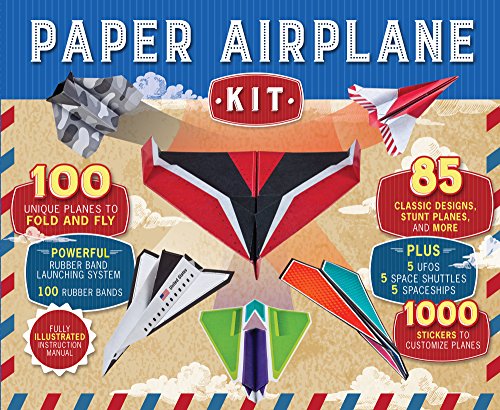
This kit focuses on traditional paper aviation with a collection of designs including airplanes, UFOs, and space shuttles. It’s designed for quick assembly and immediate flight potential, making it a solid entry point for kids and beginners who want to experience the basics of aerodynamics with simple materials. It also provides an educational angle by showcasing different aircraft silhouettes and flight behavior in a compact format.
Highlights include: simple folding instructions, a variety of hulls and shapes, and the appeal of low-cost experimentation. It’s well-suited for classroom or family exploration where the goal is to understand how wing shape and weight distribution influence flight without electronics or motors.
InAir E-Z Build B-17 Flying Fortress Model Kit (Red)

The InAir E-Z Build B-17 model kit offers a quick-build experience for a classic WWII bomber. The kit emphasizes model accuracy with detailed plastic parts and a straightforward assembly process that can be completed in a short timeframe. A display stand is included to showcase the finished model, making it suitable for desks, shelves, or educational displays.
Considerations include: ease of assembly, visual accuracy, and the suitability of the kit for display rather than flight. This makes it a good option for collectors, classrooms, or hobbyists who prefer static models that resemble real aircraft without functional flight requirements.
Guillow’s Piper Super Cub 95 Laser Cut Model Kit

This laser-cut balsa wood kit delivers a classic scale experience with a 24-inch wingspan. It includes precision laser-cut parts, decals, vacuum-formed plastic wheels, and all necessary accessories. Builders can choose to power the model with a rubber motor, or upgrade to electric or gas propulsion for functional flight. The kit balances traditional craftsmanship with the option for powered flight, appealing to both hobbyists and budding model builders.
Key points include: laser-cut precision, scale detailing, and flexible power options. As a result, it serves as a durable project that can transition from a display piece to a flying model with appropriate components and adjustments.
Barsha Space 5-Pack Balsa Wood Airplane Glider Kits

Barsha Space offers a five-pack of easy-to-assemble glider kits designed for outdoor use. The kits feature a slot-and-tab assembly that requires no tools, making them accessible to kids aged 8 and up. The balsa wood is sustainably sourced with smooth edges and non-toxic finishes, emphasizing safety and environmental considerations. Each glider is engineered for stability and can fly distances up to approximately 50 feet, depending on wind and technique.
Important considerations include: tool-free assembly, durability, and flight distance. These gliders provide a straightforward way to explore basic aerodynamics, wind effects, and flight timing in outdoor spaces such as yards and parks. They’re well-suited for family activities and school projects where quick success and repeatable flights are valued.
Buying Guide: Key Purchase Considerations For Model Airplane Kits
- Flight capability vs. display: Distinguish between kits designed to fly (powered, gliders, or remote-controlled) and those intended for static display. Choose based on whether you want to pilot aircraft or build a collectible.
- Skill level and ease of assembly: Beginner kits typically feature simpler builds, fewer parts, and clearer instructions. More advanced kits may require tools, adhesives, or modeling experience.
- Power source options: Decide between rubber-band powered, propeller-driven, or electronic propulsion. Smartphone-controlled or RC-enabled kits offer interactive experiences but require extra devices or apps.
- Material quality: Cardstock, balsa wood, and plastic parts each affect durability and flight stability. Laser-cut parts generally provide higher precision for scale models.
- Build time and fun factor: Short builds are ideal for quick wins and classroom use, while longer projects support deeper learning and craftsmanship.
- Outdoor suitability and weather tolerance: Gliders and paper planes may be sensitive to wind; robust kits with wind stabilization are better for variable conditions.
- Upgradability and future-proofing: Some kits offer upgrade paths (e.g., add electric motors, switch between paper and balsa configurations) that extend the life of the model.
- Educational value: Consider kits that teach aerodynamics, flight dynamics, or design iteration, which can enhance STEM learning.
In selecting a kit, weigh your objectives—whether you want hands-on building experience, ongoing flying practice, or a display piece. Each option above offers a distinct approach to enjoying model airplanes, from entry-level paper planes to detailed scale models and outdoor gliders.