Mini drones for kids blend simple controls, robust safety features, and colorful visuals to spark imagination and outdoor play. This guide highlights five beginner-friendly options that emphasize easy takeoff, stable hovering, and kid-friendly design. Each product section includes a quick visual, key specs, and why it’s suitable for young flyers. The buying guide at the end covers important considerations to help you choose the right drone for a child’s age, skill level, and safety needs.
| Product | Brand | Key Feature |
|---|---|---|
| Mini Drone for Kids and Beginners, C68 | Redrie | One-key takeoff/landing, altitude hold, LED light frame |
| Veeniix V995 Red Mini Drone | Veeniix | 3D flips, auto hover, 21 minutes with 3 batteries |
| SIMREX Mini Drone for Kids & Beginners | SIMREX | One-key takeoff/landing, altitude hold, headless mode |
| SYMA X100 Drone | SYMA | Smart obstacle avoidance, safe indoor flying |
| Holy Stone HS190 Foldable Nano Drone | Holy Stone | One-click takeoff/landing, altitude hold, 3 speeds |
Mini Drone for Kids and Beginners, C68
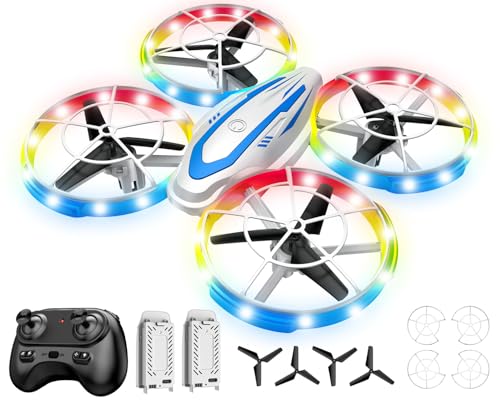
The C68 by Redrie combines a crash-resistant ABS body with fully covered propeller guards, delivering a safe indoor flight experience. Its standout feature is a bright, colorful LED light protective frame with five lighting effects, creating a playful flight atmosphere for kids. With one-key takeoff/landing and altitude hold, beginners can hover at a fixed height and practice basic moves without complicated controls. The drone is designed to withstand countless drops, making it a reliable option for new pilots.
Veeniix V995 Red Mini Drone for Kids

The Veeniix V995 is designed for indoor flight with kid-friendly features like Toss to Launch, 3D flips, and Circle Fly maneuvers. It includes three batteries for extended playtime—up to 21 minutes total—and altitude hold for stable hovering. Auto-hovering and a headless mode help beginners focus on enjoyable maneuvers rather than orientation, while adjustable speed settings tailor flight difficulty to a child’s growing skills.
SIMREX Mini Drone for Kids & Beginners

SIMREX targets new flyers with a beginner-friendly package: one-key takeoff/landing and altitude hold promote stable hovering, while headless mode reduces orientation confusion. The drone’s 3-speed options let kids start slow and progress to faster flights. The LED lights add a playful glow during flights, helping new pilots gauge altitude and motion. A stable flight system supports smooth Up/Down, Forward/Backward, and Left/Right flying for confident control.
SYMA Drone for Kids 8-12 with Obstacle Avoidance

SYMA’s X100 emphasizes safety with smart obstacle avoidance using infrared sensing that detects obstacles within 30cm. The full-enclosed propeller guards prevent accidental contact with blades, while the 180° flip-to-stop design adds a safe, fun stunt element. Takeoff, landing, and mode switching are designed for beginners, with headless mode and altitude hold ensuring stable flights even when directions aren’t obvious. It supports a smooth progression from novice to more confident flyers.
Holy Stone HS190 Foldable Mini Drone

Holy Stone HS190 is a compact, foldable nano drone built for beginners and kids. It offers one-click takeoff/landing, altitude hold for stable hovering, and three speed settings to scale with growing skill. The foldable design enhances portability, making it easy to carry for outdoor play or travel. The drone’s safety-centric features and straightforward controls are geared toward a worry-free introduction to aerial play for young pilots.
Buying Guide: Key Purchase Considerations
- Safety features: Look for propeller guards, durable materials, and a crash-resistant design to minimize injuries and damage during learning.
- Ease of use: Features like one-key takeoff/landing, headless mode, and altitude hold help beginners focus on steering rather than orientation.
- Flight time and batteries: Longer flight times extend play sessions. Drones that come with multiple batteries or USB charging are advantageous for kids’ use.
- Indoor vs outdoor use: Indoor-friendly drones should have stable hovering and obstacle protection; outdoor models may require wind resistance and more robust construction.
- Startup age and skill progression: Start with drones designed for beginners, then choose models with adjustable speeds or more advanced maneuvers to match growing skills.
- Camera and features: For younger kids, a basic, colorful design with LED lights can be engaging; more advanced cameras add value for older children, but may increase complexity.
- Size and portability: Ultra-mini designs are highly portable but may have shorter flight times. Foldable models balance size with capability.
- Maintenance and safety: Look for easy disassembly, protective frames, and readily available replacement parts like propellers and guards.
- Warranty and support: Check the manufacturer’s warranty and customer support options to address any issues quickly.
Choosing the right mini drone depends on the child’s age, dexterity, and interest in aerial tricks. For younger kids starting out, models with strong safety features, simple controls, and vivid LED lighting provide an inviting introduction to flight. As skills grow, drones with adjustable speeds, obstacle avoidance, and stunt capabilities offer new challenges while maintaining a fun learning curve. Always supervise outdoor play and establish clear safety rules to ensure responsible, enjoyable flying experiences.