Discover top mechanical kits that spark curiosity, teach core engineering concepts, and provide screen-free, hands-on learning. This guide highlights five highly-rated kits that cover robotics, structural engineering, simple machines, mechanical puzzles, and vehicle systems. Each product page includes a quick overview, key features, and what to expect during building sessions. Whether for a curious kid, a teen, or an adult hobbyist, these kits offer depth, reusability, and clear learning outcomes.
| Product | Focus | Age Range | Key Benefit |
|---|---|---|---|
| Smartivity DIY Robotic Mechanical Hand | Robotics & mechanics | 8–14 | Hands-on building with a lifetime parts replacement |
| Thames & Kosmos Structural Engineering: Bridges & Skyscrapers | Structures & forces | 8+ | 20 models to explore force, tension, and compression |
| Thames & Kosmos Simple Machines | Classic machines | 8+ | 26 models to investigate gears and six simple machines |
| 3D Wooden Puzzle Knife Kit (Adults) | Mechanical puzzles & realism | Teens & adults | 134 pieces with functional mechanical actions |
| Thames & Kosmos Mechanical Engineering: Machines & Vehicles | Machines & physics | 8+ | 20 projects plus experiments on force, motion, and gears |
Smartivity DIY Robotic Mechanical Hand

Smartivity’s mechanical hand kit provides a step-by-step DIY experience designed to engage children aged 8 through 14. The kit emphasizes screen-free learning by guiding builders through assembling a working mechanical hand, fostering problem-solving, spatial reasoning, and basic engineering concepts. The included manual supports independent or guided play, and a lifetime supply of replacement parts reduces downtime during projects. Kids explore gears, linkages, and motion while creating a functional model of a hand.
Thames & Kosmos Structural Engineering: Bridges & Skyscrapers

This kit offers a 20-model building range focused on forces, loads, compression, and tension. With over 285 interchangeable pieces and a comprehensive 36-page illustrated manual, builders experiment with real-world structural concepts while constructing bridges and skyscrapers. The modular design supports ongoing exploration, enabling users to reconfigure and compare different engineering solutions as they learn about stability, weight distribution, and structural integrity.
Thames & Kosmos Simple Machines

Explore the six classic simple machines—wheels and axles, levers, pulleys, inclined planes, screws, and wedges—through 26 model-building exercises. The durable, modular construction system is designed for compatibility with other Thames & Kosmos kits, enabling a broader investigation into gears, movement, and mechanical advantage. Real-world examples such as a flagpole, wheelbarrow, and seesaw help illustrate how simple machines simplify complex tasks.
3D Wooden Puzzle Knife Kit (Adults)

This 3D wooden knife puzzle combines craftsmanship with mechanical movement. The kit contains 134 precise pieces and an assembly video, plus a mechanism-triggered action once completed. It provides a hands-on opportunity to study mechanical principles, such as button-activated motion, while honing fine motor skills and spatial reasoning. Although marketed toward adults, the clear, logical build process makes it suitable for older teens and hobbyists seeking a challenging yet rewarding project.
Thames & Kosmos Mechanical Engineering: Machines & Vehicles
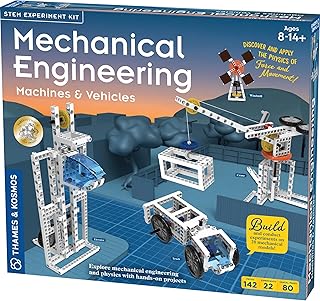
Designed to introduce mechanical engineering through 20 hands-on projects, this kit emphasizes the science of machines and vehicles. Builders explore force, motion, gravity, energy storage, momentum, and gears while assembling functional models like a windmill, elevator, crane, and all-wheel drive vehicle. The included experiments deepen understanding of how machines convert and transfer energy to perform tasks, making it a strong choice for extending inquiry into physics foundations.
Buying Guide: Key Purchase Considerations
- Age and skill level: Select kits aligned with the builder’s age to ensure appropriate challenge without frustration. Some sets target younger learners with guided steps; others appeal to teens and adults with more complex mechanisms.
- Learning goals: Identify which concepts you want to emphasize—robotics and motion, structural engineering, simple machines, or mechanical puzzles—and choose kits that foreground those ideas.
- Parts and durability: Look for kits with high-quality parts, modular components, and replacement parts available. Reusability enhances long-term learning and value.
- Guidance and support: Consider whether the kit includes clear instructions, diagrams, or online tutorials. Video guides can help with tricky assemblies and understanding underlying concepts.
- Hands-on engagement: Favor kits that require active building and experimentation rather than passive observation to maximize retention and interest.
- Storage and organization: Check if the kit provides containers or trays to keep parts organized, which supports systematic exploration and reduces lost pieces.
- Cross-kit compatibility: Some Thames & Kosmos sets integrate with other kits, enabling broader exploration of related concepts and longer product lifespans.
- Safety and materials: Ensure materials are child-friendly, with no small parts that pose choking hazards for younger builders and proper age labeling.
In evaluating these mechanical kits, consider the balance between structured guidance and open-ended exploration. Kits with sturdy manuals and clear demonstrations tend to help beginners gain confidence, while those offering modular components and multiple models encourage deeper, iterative learning for advanced builders. The best choice supports ongoing curiosity, repeat play, and the ability to connect physical tinkering with core science principles.