Guitarists chasing big, saturated metal tones often turn to purpose-built pedals to shape their core sound. This article highlights five top heavy metal distortion pedals, detailing how they sculpt gain, mids, and overall aggression. Each option is evaluated for clarity, sustain, and versatility across metal subgenres, from thrash to modern extreme metal. Use this guide to compare tonal options, build quality, and practical features for stage or studio use.
Summary of chosen products:
| Product | Brand | Key Feature | URL |
|---|---|---|---|
| JOYO High Gain Distortion (JF-04) | JOYO | Full range EQ and versatile gain | Amazon |
| EX Inferno Death Metal Distortion | EX | 3-mode boost with extreme tone control | Amazon |
| AZOR Heavy Metal Distortion | AZOR | 3-knob control with 2-way selector | Amazon |
| Behringer Ultra Metal UM300 | Behringer | Multi-gain, tube-like distortion | Amazon |
| Donner Giant Metal Distortion | Donner | 3 modes and Hi Boost for articulation | Amazon |
JOYO High Gain Distortion Pedal (JF-04)

The JOYO JF-04 delivers a broad distortion spectrum, from AC/DC-style crunch to full-on heavy metal saturation. Its full range EQ allows precise shaping of midrange power and high-end bite, enabling players to carve a tight rhythm tone or a snarling lead. The pedal’s aluminum housing provides durability, while a small LED indicator keeps you aware of its status on dark stages. This pedal is well-suited for players who want a single, flexible distortion with a robust, metal-friendly core tone.
EX Inferno Death Metal Distortion
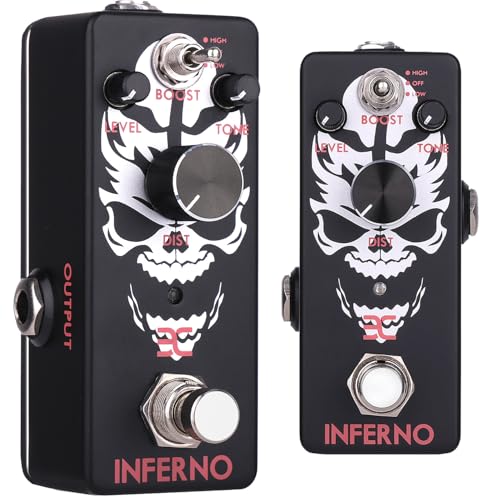
The EX Inferno Distortion is built for extreme metal with three distinct modes—Raw, Brutal, and Inferno—allowing players to dial in aggressive aggression, searing solos, and thunderous rhythm tones. The Level, Tone, and Dist knobs deliver precise control over gain structure, presence, and output, making it adaptable from tight chugs to soaring lead lines. Its dedicated boost and low-mid emphasis help carve out space in dense pedalboard setups, particularly for players relying on humbuckers or high-gain amps.
AZOR Heavy Metal Distortion
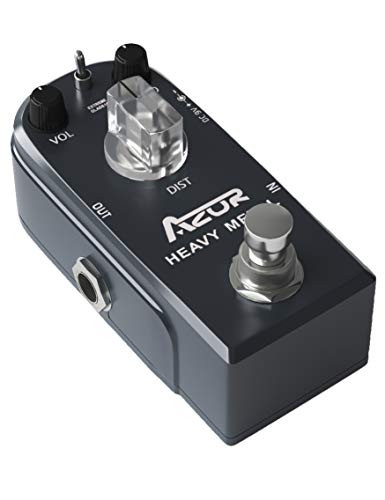
AZOR’s Heavy Metal Distortion focuses on delivering a classic metal tone with flexible control. Its three knobs—Volume, Distortion, and Mid—provide a straightforward, intuitive shaping of dynamics, while a two-way selector (Extreme/Classic) adds tonal variation between compressed, modern metal and more open classic tones. This pedal is ideal for players who want a traditional metal voice with simple, effective controls that stay musical at high gain.
Behringer Ultra Metal UM300
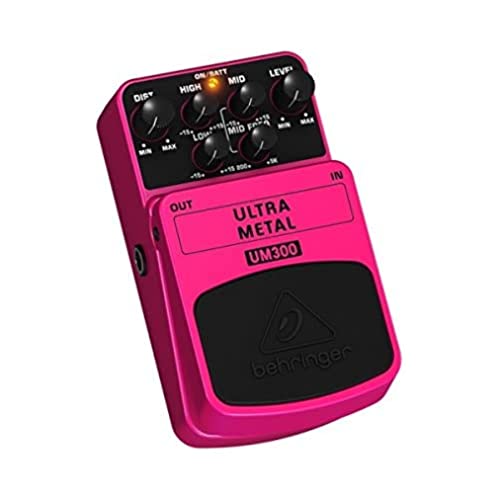
The Behringer UM300 Ultra Metal is designed to deliver extreme hard rock and heavy metal distortion with multi-gain circuitry for thick, sustain-rich tones. The pedal is noted for its robustness and a heavy, tube-like feel across gain settings. It’s a practical pick for players who want maximum heft with a straightforward interface and reliable performance in live environments, while remaining accessible for beginners upgrading from lighter drive pedals.
Donner Giant Metal Distortion

Donner’s Giant Metal Distortion emphasizes a high-gain roar with a three-mode switch and a Hi Boost function designed to articulate heavy riffs and complex techniques. The all-aluminum construction ensures durability for gigging musicians, and the indicator lights help keep operation intuitive in dim environments. This pedal suits players who want a tough, road-ready build paired with a bold, aggressive metal voice that remains clear at higher volumes.
Buying Guide: Key Purchase Considerations And Comparisons
- Gain Range And Bandwidth: Look for pedals offering wide gain ranges and flexible EQ or contour controls to transition smoothly from tight thrash to saturated, modern metal.
- Equalization And Tone Shaping: Pedals with 3-band EQs or dedicated Mid controls provide essential sculpting for a cut-through tone on crowded stages.
- Voice And Character: Some pedals favor a raw, brutal edge; others emphasize clarity at high gain. Decide if you need a modern, tight sound or a classic analog-like tone.
- Boost And Presence Features: A boost or extra high-gain stage can help you push an amp harder or push a solo with sustain and sustain control.
- Build Quality And Durability: Road-ready pedalboards demand sturdy housings (aluminum is common) and reliable footswitches and indicators.
- Interface With Other Gear: Consider how a pedal will interact with your amp, guitar pickups (single-coil vs humbucker), and other pedals (noise gates, delays, or reverbs).
- Power Requirements: Check whether the pedal uses 9V power or a 18V/sag-ready supply and if it’s true bypass to preserve signal when off.
- Size And Pedalboard Space: If you’re building a metal-focused rig, ensure the pedal fits your board layout without crowding essential effects.
- Genre Versatility: If you play multiple metal subgenres, a pedal offering a classic-to-extreme selector can save space and money.
- Value And Warranty: Compare price-to-performance and any warranty or customer support that accompanies each model.
When selecting a heavy metal distortion pedal, map your needs to tonal goals. A player seeking crushing low end and vocal mids may favor pedals with strong 3-band EQ or dedicated mid controls. For players who rely on a fast, articulate lead voice, a model with a precise high-end response and a boost option can be more effective. Build quality matters for touring musicians who depend on reliability in unpredictable conditions. Finally, consider how a pedal integrates with your rig—amps set clean or overdriven can drastically affect perceived tone.