Exploring fuel cells and clean energy through hands-on kits helps learners grasp electrochemistry, renewable energy concepts, and practical engineering. The following 5 products provide realistic demonstrations, from solar-assisted hydrogen generators to compact model cars powered by fuel cells. This guide compares features, kit scope, and educational value to help teachers, parents, and students choose the right kit for classroom or home experiments.
| Product | Type | Focus |
|---|---|---|
| Horizon Solar Hydrogen Kit | Educational kit | Solar-powered hydrogen production |
| Horizon Renewable Energy Set | Science education | Complete clean energy system |
| ZHIZAOLABSCIENCE Hydrogen Car Kit | Model car | Hydrogen and solar power demonstration |
| fischertechnik PROFI H2 Car | Construction kit | Electrolysis-powered vehicle |
| Construct & Create Salt Water Kit | DIY STEM kit | Salt-water fuel cell principles |
Horizon Solar Hydrogen Education Kit

The Horizon Solar Hydrogen Education Kit demonstrates renewable energy technology by using sunlight to generate hydrogen from water. This kit emphasizes safe, small-scale solar energy conversion and the basics of hydrogen production. Through hands-on assembly and experiments, learners observe how solar energy can be stored as chemical energy in hydrogen and later used in demonstrations of fuel cell principles. The kit is designed to introduce students to clean energy systems without requiring extensive prior knowledge of chemistry.
Key educational value includes illustrating the relationship between solar input, water electrolysis, and hydrogen storage. The components encourage inquiry into efficiency, energy loss, and system integration. Ideal for middle school to early high school science projects, it supports project-based learning and science fairs with clear, observable outcomes. The hands-on approach helps students connect theory with practical application, reinforcing why fuel cells and renewable energy matter in everyday technology.
Horizon Renewable Energy Science Education Set

The Renewable Energy Science Education Set from Horizon is designed to demonstrate a complete clean energy system. It focuses on building and understanding how different renewable sources can be integrated into a single working model. Learners can run experiments to compare solar, wind, and storage concepts within a compact, safe classroom package. The kit supports inquiry-based investigations into energy conversion, system efficiency, and the role of controllers in managing energy flow.
Educators will find the set valuable for structured activities that progress from basic concepts to more complex system optimization. The materials emphasize safe handling, measurement of outputs, and critical thinking about how to scale up clean energy solutions. Although compact, the kit provides enough versatility for multiple class sessions or enrichment projects, fostering collaboration and data collection skills.
Hydrogen Fuel Cell Car For Chemical Demonstration
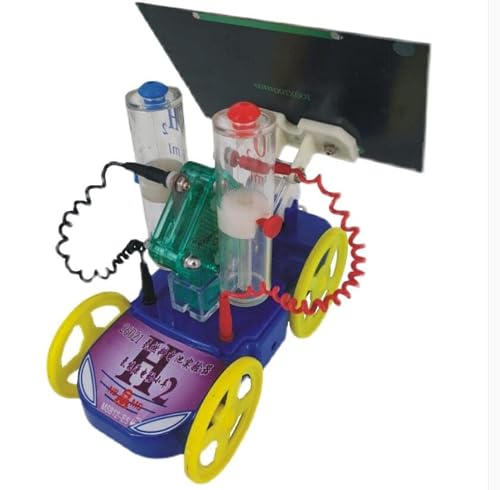
This kit combines hydrogen fuel cell technology with solar power to demonstrate a small automotive model. The included components provide a tangible link between electrochemical reactions and mechanical motion, making it suitable for classrooms seeking interdisciplinary demonstrations across chemistry, physics, and engineering. The model car offers straightforward assembly steps and clear outcomes to observe how solar energy can drive hydrogen-based propulsion.
Educational emphasis centers on the fundamentals of fuel cells, hydrogen production, and energy conversion. It supports experiments that compare energy input from light and the resulting motion, alongside discussions about efficiency and safety in handling hydrogen-related demonstrations. Students can document performance metrics, fostering scientific reporting and hypothesis testing skills.
fischertechnik PROFI H2 Fuel Cell Car

The PROFI H2 Fuel Cell Car Construction Kit by fischertechnik provides a robust, German-engineered platform for building a futuristic vehicle powered by electrolysis. The kit includes 117 parts that enable the construction of a detailed and functional vehicle model. This is a higher-complexity option suited for older students or enthusiasts who want to explore advanced assembly, tuning, and design considerations in energy-efficient vehicles.
Educational benefits include deep hands-on practice with mechanical design, system integration, and a real-world approach to fuel cell propulsion. The kit encourages experimentation with different configurations, providing opportunities to measure performance changes as students modify the design. It also emphasizes quality manufacturing and precision engineering in educational robotics contexts.
Construct & Create Salt Water Fuel Cell Car Kit

The Construct & Create Salt Water Fuel Cell Engine Kit uses a salt-water electrolyte to demonstrate basic fuel cell principles in a compact, durable construction kit. The 89-piece set includes ABS and PP plastics with metal screws and springs, designed for classroom- or home-based STEM activities. Learners assemble components to create a working model car and explore ion displacement, electrochemical reactions, and energy release in a safe, controlled environment.
Educational scope includes practical experiments on ion transport, reaction efficiency, and the impact of electrolytes on cell performance. The kit’s straightforward assembly encourages problem-solving, documentation, and iterative testing. It is well-suited for beginner to intermediate learners who want a clear, repeatable demonstration of fuel cell science and electrochemical energy storage.
Buying Guide: Key Purchase Considerations And Comparisons
When selecting a fuel cell car science kit, consider educational goals, age appropriateness, and the level of hands-on challenge. For younger students or beginners, kits that emphasize simple demonstrations, vivid visuals, and safe, guided experiments are ideal. For older students or hobbyists, options with more parts, advanced assembly, and opportunities to optimize performance offer deeper learning.
- Educational scope: Decide whether you want a basic demonstration kit, a complete system model, or an advanced construction kit that teaches design optimization and engineering thinking.
- Safety and setup: Ensure the kit provides safety instructions, clear assembly steps, and supervision guidelines suitable for the intended age group and educational setting.
- Materials and durability: Look for kits with robust components, reliable build quality, and replaceable parts to support multiple experiments or classrooms.
- Real-world relevance: Favor kits that tie to current clean energy topics, such as solar-assisted hydrogen production or fuel cell propulsion, to enhance engagement and relevance.
- Instructional value: Some kits include experiment ideas, teacher guides, or activity sheets that support curriculum alignment and assessment.
Comparison overview: For quick reference, the Horizon Solar Hydrogen Kit and the Renewable Energy Set emphasize solar energy and integrated systems, suitable for foundational learning. The ZHIZAOLABSCIENCE car and fischertechnik PROFI H2 kit provide hands-on vehicle models with increasing complexity, ideal for project-based learning and deeper exploration of fuel cell propulsion. The Construct & Create salt-water kit offers a simplified, entry-level demonstration of ion displacement and electrochemical processes using readily available materials.