Exploring drones designed for payload delivery helps you choose equipment that balances payload capacity, control range, and ease of use. This guide highlights five reliable payload drop systems compatible with popular consumer and professional drones, focusing on secure mounting, remote release, and practical applications like fishing bait drops, wedding celebrations, search and rescue, and emergency deliveries. Each option offers different load capacities and ranges to fit your mission profile and drone model.
| Product | Brand | Max Payload | Range | Drone Compatibility |
|---|---|---|---|---|
| Drone Payload Release Airdrop System | Generic | 1000 g (system; drone limits apply) | ~500 m | DJI Mini 4 Pro, Mini 3 Pro, Air 3, Mavic 3 family, F11 |
| Universal Drone Payload Dropper | ZLYLVRC | 500 g | ~100 m | DJI FLIP, AIR 3S, Mavic 3 Pro |
| Universal Drone Payload Delivery System | AMOMKET | Unknown (stable loads) | ~1 km | DJI Mini 3 Pro, Mavic 3 Pro, Mini 4 Pro, Air 3, Avata & more |
| Airdrop System For Mini 4 Pro | Generic | 750 g | ~50 m | Mini 4 Pro, Mini 3 Pro, Air 3, etc. |
| NewUpgraded Bingchat Payload System | Bingchat | Not specified | ~5 miles | 4K drone with payload release |
Drone Payload Release Airdrop System For Multi-Drone Models

This payload release system is designed for a broad range of drones including DJI Mini 4 Pro, Mini 3 Pro, Air 3, and Mavic 3 series. It supports one-button operation via the remote controller and features a USB charging port for convenient power management. The device’s release mechanism is compatible with loads up to the drone’s maximum payload, with specific limits based on the drone model, such as 100 g for Mini 4 Pro/Mini 3 Pro and up to 500 g for Air 3 and Mavic 3 variants. Range is reported around 500 meters, enabling mid-range object deployment in open environments. Suitable for fishing bait drops, wedding-related celebrations, or search and rescue payloads when integrated with compliant drones.
Universal Drone Payload Dropper For DJI FLIP/AIR 3S/Mavic 3 Pro

With broad compatibility, this payload dropper accommodates DJI FLIP, AIR 3S, and Mavic 3 Pro, using a simple Velcro mounting method to secure the device without damaging the drone. It supports a payload of up to 500 g and offers a one-button remote release at a practical range of about 100 meters. The ultra-lightweight design (around 32 g) minimizes flight-time impact, making it appealing for extended missions such as gifting, surprise events, or critical supply drops in wilderness rescues. It is a compact solution for quick payload changes across compatible platforms.
Universal Drone Payload Delivery System With Remote Release

This universally compatible airdrop system is designed to work with a broad mix of consumer and prosumer drones, including Mini 4 Pro, Mini 3, Mini 2, Air 3, Mavic 3 Pro, and Avata families. The installation relies on Velcro bindings and is described as simple, with a robust secure hold during flight. The release is remotely controlled with a distance exceeding 1 kilometer on some configurations, offering a stable human–machine interface for reliable payload drops—ideal for event props, fishing lures, or emergency provisions in remote areas.
Airdrop System For Mini 4 Pro And Related Drones

Designed specifically for Mini 4 Pro, Mini 3, Mini 3 Pro, Mini 2, Mini SE, Mavic Mini, Mavic Pro, and Mavic Air variants, this payload release system uses a built-in 3.7V 350 mAh battery and a 500-meter remote range. It supports a maximum payload of up to 750 g, contingent on the drone’s own limits. The compact unit includes a Type-C charging port and a long standby time, enabling reliable drops during field missions such as distance-constrained supply drops, fishing lure deployment, or celebratory releases at events.
NewUpgraded Bingchat Payload Drone With Tablet Controller
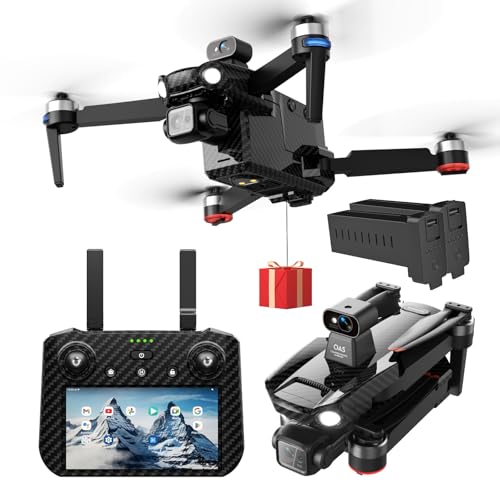
This upgraded payload-capable drone emphasizes an integrated tablet controller experience, including a 4K camera drone with payload release and a 360° obstacle avoidance system. The tablet controller supports Android apps via Google Play, offering a familiar interface for planning and executing drops. The payload release feature is complemented by safety features such as laser-based obstacle avoidance. The product emphasizes extended range capabilities through an alternate controller and long battery life, suitable for complex aerial delivery tasks requiring real-time control and monitoring.
Buying Guide
Key considerations when selecting a drone payload system include compatibility, payload capacity, release control range, and impact on flight performance. Compatibility: verify that the payload dropper supports your drone model and firmware version. Some devices are universal, while others match only specific lines such as Mini, Mavic, or Avata families. Payload capacity should align with typical delivery items and the drone’s maximum payload to avoid overloading and reduced flight stability.
Release control: assess whether you prefer a one-button release or a more complex remote control with longer range. Distance requirements vary by mission: casual demonstrations may suffice with tens of meters, while search and rescue or wildlife rescue scenarios may demand 1 km or more. Power and charging: check battery capacity, charging interfaces (USB-C or Type-C), standby time, and whether a built-in battery is required for operation. Mounting method matters: Velcro mounting is common, but secure mounting that does not alter the drone’s center of gravity is critical.
Reliability and safety: look for products with robust build quality and safety features such as secure latches and predictable release behavior. Mission-critical drops (medical supplies, safety gear) should employ systems with tested release mechanisms and clear documentation. Budget considerations include weight impact on flight time; lighter payload devices preserve endurance, but may limit payload or durability.
Operational scenarios: for photography or wedding-related releases, plan for predictable, scripted deployments to minimize disruption and ensure safety. For fishing bait or emergency supplies, consider the environmental conditions (wind, GPS accuracy, and ambient interference) that can affect drop precision. Assess whether the system offers remote or autonomous release modes and how easily it can be integrated into your existing flight plan.
User considerations: ensure you can access after-sale service, spare parts, and firmware updates. Some brands provide replacement parts and app improvements, while others emphasize long-term support and local storage assistance. Finally, review any regulatory requirements for payload drops in your area to ensure compliant and safe operations.