Discover a curated set of build-it-yourself toys designed to spark hands-on learning and imaginative play. These kits cover woodworking, mechanical building, and STEM challenges suitable for kids and beginners, with safe materials and clear instructions. Below you’ll find five highly rated options that encourage problem solving, fine motor skills, and teamwork. Compare features, ages, and activities to choose the right project for your young builder.
| Product | Brand | Age Range | Key Skill Focus |
|---|---|---|---|
| Lakeshore Build-It-Yourself Woodworking Kit | Lakeshore | All ages (with supervision) | Woodworking, Fine Motor Skills, Problem Solving |
| Kraftic Woodworking Building Kit | Kraftic | 6+ | Woodworking, Carpentry Basics, Creative Crafting |
| NXONE 195 PCS Educational STEM Toys | NXONE | 3-10 | STEM, Construction, Team Play |
| Parhlen Educational Building Blocks | Parhlen | 4-10 | Engineering Design, Shapes & Colors, Motor Skills |
| IQ BUILDER STEM Learning Toys | IQ BUILDER | 3-10 | STEM Foundations, Critical Thinking, Problem Solving |
Lakeshore Build-It-Yourself Woodworking Kit

The Lakeshore kit introduces children to woodworking using real tools and supplies. It includes over 80 smooth pine pieces, a lightweight hammer, and nails, enabling hands-on practice with basic carpentry concepts. The set is designed to foster creativity while strengthening problem-solving and motor skills through guided projects and open-ended play. Safety considerations emphasize supervision and age-appropriate use of tools, ensuring an educational yet manageable experience for young builders.
Kraftic Woodworking Building Kit for Kids and Adults

The Kraftic kit provides 35 real wood pieces along with screws, a screwdriver, instruction manual, paints, and brushes. Each project comes in a separate bag to reduce mix-ups, and the step-by-step manual supports independent work. Suitable for kids learning basic assembly and painting, the set emphasizes safety with pre-sanded wood and pieces sized for small hands. It encourages designing colorful structures such as a town hall or other themed models, promoting creativity and planning skills.
NXONE 195 PCS Educational STEM Toys
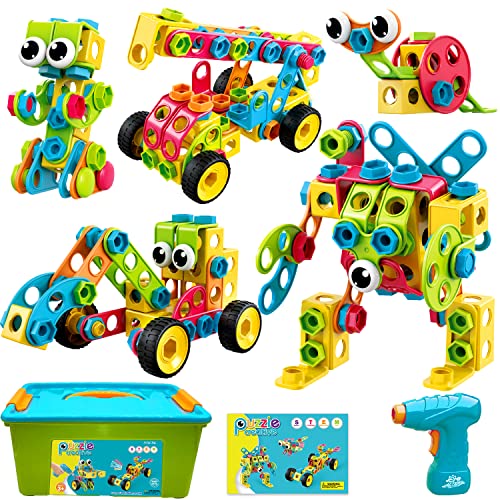
NXONE’s 195-piece STEM set combines blocks, a storage box, and an electric drill for expanded play. It accommodates multiple children building together, encouraging teamwork and social interaction. The kit aims to develop science, technology, engineering, and mathematics skills through construction play, with safety features such as toxin-free materials and no sharp edges. Age-appropriate supervision is recommended, as is using the drill responsibly to avoid accidents during assembly. The assortment supports imaginative engineering projects and collaborative problem solving.
Parhlen Educational Toys Building Blocks
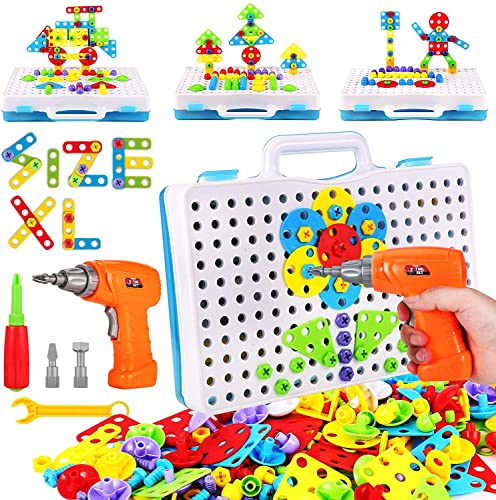
Parhlen offers 244 pieces including blocks, nuts, bolts, wheels, and an interchangeable electric screwdriver (batteries required). Children can assemble 2D and 3D crafts such as animals and vehicles, learning color and shape recognition along with engineering concepts. The set emphasizes creativity, hand-eye coordination, and problem-solving while providing opportunities for guided play with parental involvement. It’s suitable for classroom use or family activities, promoting persistent experimentation and design thinking.
IQ BUILDER STEM Learning Toys
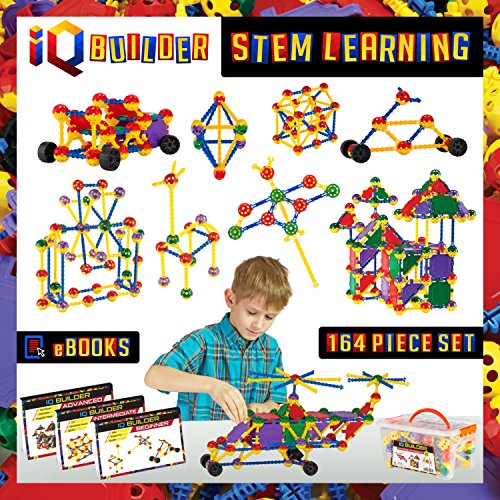
IQ BUILDER emphasizes foundational STEM education with a focus on critical thinking and problem solving. This kit is designed for younger builders aged 3-10, offering teacher-recommended value and a broad range of activities that promote cognitive development. The play patterns support early engineering concepts, spatial reasoning, and collaboration. With durable pieces and kid-friendly design, it’s a practical option for homes and classrooms seeking structured yet enjoyable building experiences.
Buying Guide: Key Purchase Considerations
- Age appropriateness: Check recommended ages and supervision needs. Some kits are suited for early learners, while others target older children with more complex projects.
- Safety and materials: Look for kid-safe woods, non-toxic paints, and rounded edges. Avoid sets with small parts for younger children to reduce choking hazards.
- Skill progression: Choose kits that offer a learning curve—from basic assembly to more intricate builds—to maintain engagement over time.
- Tools included: Some sets come with basic tools like screwdrivers or hammers, while others are tool-free. Consider your child’s comfort with tools and adult supervision requirements.
- Storage and organization: Sets with storage boxes or labeled bags help keep pieces organized and reduce setup time for future projects.
- Group play and learning style: If siblings or friends will build together, consider multitool or multi-part kits designed for collaborative play.
- Educational focus: Decide whether your priority is engineering fundamentals, creativity, or a blend of STEM concepts to align with curriculum goals.
- Durability and maintenance: Assess the longevity of parts and ease of cleaning or repainting if kids want to customize finished projects.
Building experiences through these kits can support hands-on learning, fine motor development, and teamwork. When selecting a kit, balance the child’s interests with safety considerations and the available supervision to maximize the educational value and enjoyment.