Building battle bots is a powerful way to introduce kids and teens to robotics, coding, and engineering. The kits below span Arduino-based platforms, Scratch and Arduino education, hydraulic concepts, and remote-controlled combat. Each option supports developing hands-on skills, critical thinking, and creativity through interactive play. The following selections are chosen for compatibility with standard American classroom and home setups, clear learning paths, and a balance of beginner and advanced features.
Overview of selected products:
| Product | Brand | Key Focus |
|---|---|---|
| ELEGOO Conqueror Robot Tank Kit | ELEGOO Store | Arduino-based robotics, DIY assembly, graphical programming |
| Makeblock mBot Kit | Makeblock Store | Scratch to Arduino coding, beginner-friendly robotics |
| Remote Control Battle Robots (Grey) | Unspecified | 2.4 GHz wireless control, 2-player battles |
| Thames & Kosmos Hydraulic Boxing Bots | Thames & Kosmos Store | Hydraulics, physics, construction |
| Remote Control Battle Robots (ADUSRIZ) | ADUSRIZ Store | Realistic battle action, autonomous and manual modes |
ELEGOO Conqueror Robot Tank Kit With UNO R3

The ELEGOO Conqueror kit centers on Arduino development and open learning resources. It emphasizes DIY assembly to build concentration, hands-on skills, and a tangible understanding of basic robotics. The kit uses a graphical programming approach for building block-style functions, with a range of car features designed to spark creativity and practical problem-solving in young builders and teens alike.
Educational value includes expanding knowledge in electronics, motors, sensors, and basic programming concepts. With step-by-step assembly and a platform rooted in widely used Arduino ecosystems, learners can progressively tackle more complex projects, while the open resources support classroom or home use. The kit’s design supports collaborative play and project-based learning, making it a solid choice for motivated beginners and curious adventurers.
Makeblock mBot Robot Kit

The mBot kit is designed for entry-level coding and robotics education. It guides learners from Scratch to Arduino, enabling a smooth transition as skills grow. The kit includes clear building instructions that can be completed in about 15 minutes, making it an accessible entry point into electronics, machinery, and robotics. Its remote-control and line-following features offer immediate hands-on experiences, while rich tutorials and free apps support ongoing exploration and project creation. It’s ideal for classrooms and home use where sustained, guided exploration is valued.
Educational scope covers programming fundamentals, sensor integration, and simple hardware components. The kit’s broad app ecosystem and teaching resources help educators and parents structure learning paths, track progress, and encourage creativity in project design and experimentation.
Remote Control Battle Robots Grey

These two-player battle robots deliver realistic combat action with a champion car Crowbar and a hammer. The 2.4 GHz wireless control system provides stable, interference-free operation, enabling simultaneous battles. The set includes rechargeable batteries, encouraging extended play sessions without frequent replacements. Beyond play, this kit supports STEM learning by engaging students in problem-solving, mechanism design, and iterative testing as they optimize controls and tactics for competitive play.
From a pedagogy perspective, the remote-control interface fosters hand-eye coordination and strategic thinking. The competitive element adds motivation for collaborative projects, parent-child engineering challenges, and teamwork, with adaptable rules that scale as skills improve.
Thames & Kosmos Hydraulic Boxing Bots

This kit explores hydraulics with two boxing robots powered by water-based mechanisms. Learners study the physics, design, and components of hydraulic systems, including gears, cylinders, and pistons. The moving upper and lower bodies enable realistic dodge, jab, and punch motions, illustrating core principles of hydraulics and leverage. The hands-on assembly reinforces measurement, system integration, and cause-and-effect reasoning while emphasizing safety and procedural discipline throughout the build.
The project encourages experimentation with motion control and fluid power, highlighting how simple hydraulic systems can translate into dynamic, real-world outcomes. It’s well-suited for science-focused activities or maker-space projects that want to emphasize physical principles in a tangible way.
Remote Control Battle Robots (ADUSRIZ)
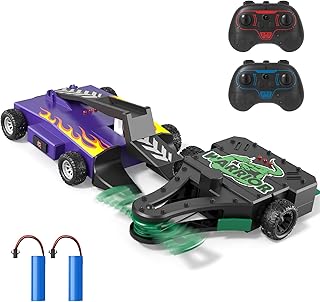
This two-player set provides a robust blend of realism and versatility, featuring battle-ready components with both manual remote control and smart auto modes. The remote control offers precise forward, backward, and 360-degree rotation, while the smart auto mode enables autonomous navigation and combat. A light-sensing mechanism adds a strategic element, where hits affect the robot’s status. This kit suits learners who enjoy engineering challenges, battle strategy, and iterative design—encouraging experimentation with control systems, sensors, and autonomous behaviors.
Buying Guide: Key Purchase Considerations And Comparisons
- Skill level and learning path: For beginners, starting with Scratch-to-Arduino systems like the mBot helps children learn programming concepts in a visual way before diving into more complex circuits. For older or more advanced learners, Arduino-based kits encourage deeper electronics understanding and custom code development.
- Programming approach: Graphical programming (block-based) vs. text-based coding affects the pace of skill development. Choose a kit that aligns with the learner’s current abilities and future goals.
- Construction complexity: Some kits emphasize quick assembly and immediate play (great for motivation), while others require longer build times, which can foster patience and attention to detail.
- Hands-on experimentation: Look for kits with modular components, open resources, and available tutorials. These foster independent exploration and project-based learning, useful in homes and classrooms alike.
- Hardware and sensors: Consider which sensors (line-follow, obstacle-avoidance, hydraulic systems) align with learning objectives—basic robotics, physics, or engineering principles.
- Expansion potential: Kits that support additional accessories or upgrades offer a path to more advanced projects, protecting the initial investment as skills grow.
- Durability and safety: Ensure parts are age-appropriate and designed with safe assembly processes, especially for younger builders.
- Group learning suitability: Some kits are ideal for pair or small-group projects, supporting collaboration and communication skills, while others are better for individual projects.
- Learning outcomes: Align the kit with goals like coding literacy, problem-solving, mechanical reasoning, or STEM confidence. Look for resources that explicitly map activities to these outcomes.
- Budget and value: Compare the breadth of components, the quality of documentation, and the availability of replacement parts when evaluating overall value.