Finding the right long-range binoculars depends on your activities, budget, and how you prioritize light, clarity, and portability. This guide highlights top options that balance magnification, lens size, and optical coatings for bird watching, hunting, stargazing, or travel.
The following summary table shows five highly relevant models, their brands, magnification ranges, and objective sizes to help you compare quickly.
| Product | Brand | Magnification / Objective | Notes |
|---|---|---|---|
| WOZEL 20×70 Binoculars | WOZEL | 20x / 70mm | Low-light capability, FMC optics, large eyepiece |
| FLYANT 20×50 High Powered Binoculars | FLYANT | 20x / 50mm | Wide field at 1000 yards, good eye comfort, versatile |
| Celestron SkyMaster 15-35×70 | Celestron | 15-35x / 70mm | Versatile zoom, tripod compatible, bright views |
| Occer 12×25 Compact Binoculars | occer | 12x / 25mm | Compact, comfortable eyepiece, FMC/BaK-4 coatings |
| Celestron SkyMaster 20×80 | Celestron | 20x / 80mm | Large aperture, tripod adapter, bright long-range views |
Below are detailed sections for each product, followed by a buying guide that covers practical considerations, usage scenarios, and how to compare models for your needs.
WOZEL 20×70 Binoculars for Adults

WOZEL’s 20×70 binoculars are designed for long-range viewing with a 70mm objective lens and 20x magnification. The large 26mm eyepiece helps center distant details and reduce eye strain during extended use. The combination of a wide objective and high magnification aims to balance brightness with reach, suitable for bird watching, hunting, travel, and outdoor exploration. These binoculars use high-quality BAK-4 prisms and fully multi-coated optics to deliver accurate color and reduced glare, supporting clear images in various lighting conditions.
FLYANT 20×50 High Powered Binoculars

FLYANT offers 20×50 high-powered binoculars with an impressive 168-yard field of view at 1000 yards. The 26mm eyepiece design provides wider eye relief and improved comfort for extended viewing, while multilayer-coated aspherical lenses and BAK-4 prisms deliver bright, sharp images with minimal distortion. The FMC green coatings further boost light transmission, enhancing clarity in bird watching, camping, hiking, and outdoor events. These binoculars are positioned as versatile gifts for outdoor enthusiasts and travelers.
Celestron SkyMaster 15-35×70 Zoom Binoculars

Celestron SkyMaster 15-35×70 binoculars provide a powerful zoom range from 15x to 35x with large 70mm objective lenses. The design is tripod-friendly, with a ¼”-20 adapter to support stable, long-range viewing—ideal for astronomy and distant terrestrial observations. BaK-4 prisms maximize light transmission for brighter, crisper images, especially during dawn, dusk, or nighttime sessions. This model suits serious nature observers and stargazers who value flexibility and stability.
Occer 12×25 Compact Binoculars
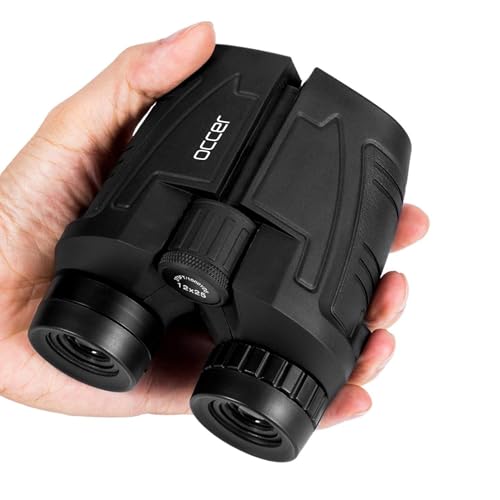
Occer’s 12×25 compact binoculars balance portability with adequate magnification for many outdoor activities. The 25mm objective lens and 273ft/1000yds field of view offer a broad view for birding, travel, sightseeing, or casual wildlife watching. FMC broadband coatings and BaK-4 prism construction support image brightness and color fidelity, while adjustable eye cups accommodate eyeglass wearers. The lightweight, ergonomic design makes them a convenient option for everyday use.
Celestron SkyMaster 20×80 Binoculars

Celestron SkyMaster 20×80 binoculars emphasize long-range capability with 20x magnification and an 80mm aperture. They are designed for astronomy and terrestrial use, offering bright, detailed views when paired with a tripod (adapter included). BaK-4 prisms optimize light throughput, supporting clearer images in low-light conditions. The combination of high magnification and large lenses makes them a strong choice for users prioritizing distant targets and celestial viewing.
Buying Guide
- Magnification versus field of view: Higher magnification reveals finer details but narrows the field of view. Choose a model that balances reach with the ability to keep target tracking easy in your intended activity.
- Objective lens size: Larger lenses (e.g., 70–80mm) gather more light, improving brightness in dim conditions, but add weight and bulk. Smaller lenses offer portability at the cost of brightness.
- Coatings and prisms: FMC coatings and BaK-4 prisms boost light transmission and image clarity. Multi-coated elements reduce glare and enhance color accuracy.
- Tripod compatibility: For long-range use or astronomy, a stable tripod dramatically improves views. See if the model includes a tripod adapter or is easily dockable to one.
- Ergonomics and eye relief: Eye relief and comfortable eyepieces prevent fatigue during extended sessions. Eyeglass wearers should verify adjustable eye cups and generous eye relief.
- Waterproofing and durability: If you plan outdoor use, look for waterproofing, rugged housings, and non-slip grips to withstand weather and handling.
- Field of view and weight: A wide field of view eases target acquisition. Heavier models offer more stability on a tripod but may reduce portability for hiking or travel.
- Intended use: For birds and wildlife, prioritize wide fields and bright optics. For astronomy, seek high magnification and tripod support. For travel, prioritize compactness and durability.
- Price versus performance: Higher price often correlates with better coatings, better optics, and ruggedness. Compare what features matter most to your activities.