Discover an engaging way to explore the night sky with beginner-friendly telescopes designed for kids. The right starter telescope balances simple setup, sturdy construction, and clear optics to foster curiosity about moons, planets, and distant galaxies. Below is a curated guide featuring five child-friendly options that pair educational value with hands-on play, helping young stargazers develop confidence while learning core astronomy concepts.
Summary Table of Chosen Products
| Product | Brand | Key Features | Magnification / Aperture |
|---|---|---|---|
| NASA Lunar Telescope for Kids – 90x | Blue Marble | Moon detail, finder scope, tabletop tripod, beginner-friendly | 90x magnification; finder scope |
| Gskyer Telescope, 70mm Aperture | Gskyer | Fully coated optics, phone adapter, wireless remote | 70mm aperture, 400mm focal length |
| Telescope for Kids & Beginners 50mm, Luzsco | Luzsco | All-in-one kit, tripod, finder scope, Barlow lens, gift-ready | 20x–100x magnification |
| Educational Insights GeoSafari Starview | Educational Insights | Beginner-friendly, activity journal, adjustable magnification | 10x & 50x eyepieces |
| ToyerBee 70mm Refractor | ToyerBee | Big aperture, 15x–150x, wireless remote | 70mm aperture |
NASA Lunar Telescope for Kids – 90x Magnification
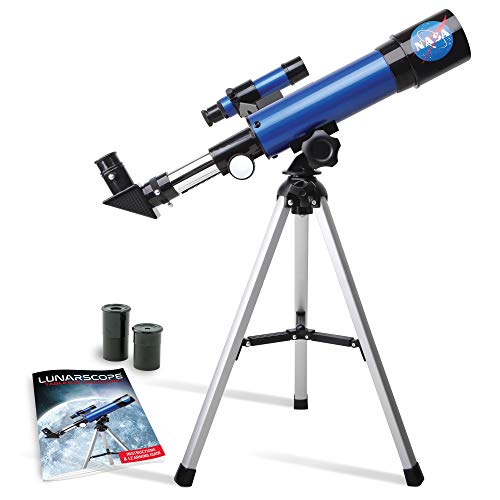
The NASA Lunar Telescope for Kids is designed to introduce young observers to lunar features and craters. It includes a finder scope, low- and high-power eyepieces, and a tabletop tripod for stable viewing. Its compact design makes it suitable for desktop use or small outdoor spaces, promoting hands-on exploration of the Moon’s surface and phases.
Ideal for: budding space enthusiasts who want a simple, light setup with reliable optics. The package emphasizes lunar detail, making it an educational gift for science-minded children. The included smooth mount system helps kids track the Moon’s features with minimal effort.
Performance notes: The combination of finder scope and eyepieces assists beginners in locating objects before zooming in. It’s best used under modest lighting conditions and when mounted on a stable surface to maximize clarity of lunar detail.
Gskyer Telescope, 70mm Aperture 400mm AZ Mount

The Gskyer refractor offers a 70mm aperture and 400mm focal length, delivering bright, crisp images of the Moon, planets, and brighter deep-sky targets for beginners. It ships with two eyepieces and a 3x Barlow lens to extend magnification. A 5×24 finder scope with cross-hair lines makes locating objects easier for younger observers, and a wireless remote enables photo capture for record-keeping and sharing discoveries.
Pros: robust optical path with multi-coated glass, user-friendly views, and portable design for travel or school presentations. Cons: higher magnification requires a steady mount and proper alignment; advice favors practicing on easy targets first.
Telescope for Kids 50mm 100x – Luzsco
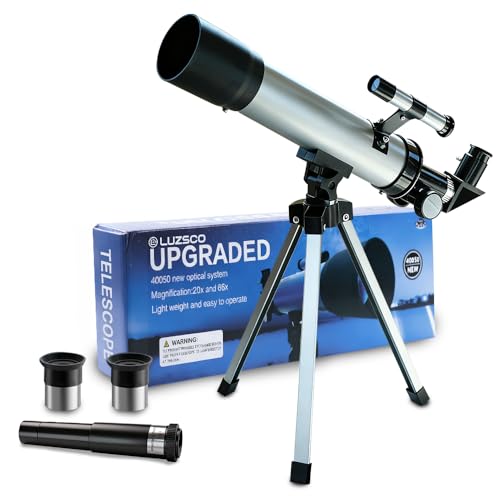
This Luzsco 50mm beginner telescope pairs a 50mm aperture with 20x–100x magnification, making it versatile for lunar studies and brighter planetary observations. The kit includes a sturdy tripod, two eyepieces, a finder scope, and a Barlow lens, all packed inside a festive gift-ready box. The bundled educational accessories enhance the learning experience and encourage ongoing curiosity about space.
Highlights: compact and lightweight for kids, easy assembly, and an appealing gift presentation. The combination of additional accessories supports early STEM exploration while keeping setup approachable for young hands.
Telescope for Kids 50mm 100x – Luzsco (Second Listing)

This Luzsco variant provides a repeatable 20x–100x range with similar kit components: tripod, finderscope, two eyepieces, and a Barlow lens. It emphasizes durability and easy handling for kids aged 6–12, enabling family viewing sessions that foster observational skills and early astronomy literacy.
Educational Insights GeoSafari Starview Telescope

The GeoSafari Starview is purpose-built for beginners, combining straightforward setup with an activity journal to guide discovery. It offers two magnification options (10x and 50x) via interchangeable eyepieces, enabling kids to scan the sky, identify constellations, and practice focus adjustments. This model supports classroom or home science exploration and STEM learning.
ToyerBee 70mm Refractor for All Ages

The ToyerBee 70mm refractor is designed for both kids and adults, featuring 15x–150x magnification and a 70mm aperture for bright, clear views of the Moon, planets, and brighter deep-sky objects. A phone adapter and wireless remote expand the learning experience by enabling photo capture and sharing of celestial discoveries. The adjustable tripod supports various viewing angles and heights for growing learners.
Buying Guide: Key Purchase Considerations
- Age-appropriate complexity: Choose a telescope with simple assembly, intuitive controls, and clear instructions to minimize setup friction for kids.
- Optical quality and stability: Look for multi-coated optics and a sturdy mount or tripod. A smooth tracking mount helps kids locate and follow celestial objects more easily.
- Magnification range vs. ease of use: Higher magnification is exciting but demands steadier support. For beginners, kits offering 20x–100x with one or two eyepieces provide a balanced start.
- Educational extras: Bundled accessories like finder scopes, Barlow lenses, STEM activity guides, and observation journals enhance learning and engagement.
- Portability and storage: Light, compact designs with carry cases are better for travel between home, school, or outdoor observing nights.
- Ease of capture: Camera adapters or wireless remotes enable kids to document their observations, reinforcing interest and memory retention.
- Future growth: Consider whether the telescope can be upgraded with additional eyepieces or a sturdier mount as skills progress.
Choosing the right starter telescope involves balancing curiosity with practicality. The five options highlighted here offer a range of accessibility, optical quality, and educational value to support kids as they begin exploring space. When paired with guided learning and safe outdoor observing practices, these tools can establish a lasting foundation in astronomy and STEM.