Model car kits in popular scales like 1:12, 1:16, 1:25, and 1:24 offer a wide range of building experiences—from simple, beginner-friendly kits to detailed, display-worthy projects for seasoned hobbyists. This guide highlights five notable options that align with a 1:12 focus while also spanning related scales and classic muscle car designs. Each entry covers key features to help you compare complexity, parts count, and authenticity, aiding informed purchasing decisions for enthusiasts and casual builders alike.
Summary of Selected Products
- Revell 12812 1969 Chevy Camaro Z/28 1:12 Scale: 175 parts, detailed V-8, rally wheels
- AMT 1955 Chevy Bel Air Hardtop 1:16 Scale: 90+ parts, white/clear/chrome parts
- AMT 1:25 Scale 1967 Shelby GT-350: 123 parts, detailed decals, Ford V8
- C.P.M. MPC 1:25 Scale 1967 Pontiac GTO: 85+ parts, V8 power, detailed interior
- Revell 14530 1969 Pontiac GTO Judge 1:24 Scale: 63 parts, Ram Air 400 V-8
The following sections present each kit with an overview of its standout features, complexity, and what to expect during assembly. Note that some kits include optional parts or decals to customize the final look.
Revell 1969 Chevy Camaro Z/28 1:12 Kit

The Revell 12812 Camaro Z/28 is a sizable 1:12 scale model designed for experienced builders. With 175 parts and a Skill Level 5 rating, this kit emphasizes realism and detailed engineering. The package includes a fully detailed 302-cubic-inch small-block V-8 engine and an authentic dual exhaust system. Factory-stock rally wheels and tires, vinyl tubing for spark plug wires and heater hoses, and optional front and rear spoilers add to the customization potential. A full-color, multi-step assembly booklet supports accurate reproduction and provides tips for achieving a showroom-quality finish. This kit is suitable for hobbyists who enjoy complex builds with a high level of detail and are comfortable with advanced assembly steps and decals.
AMT 1955 Chevy Bel Air Hardtop 1:16 Kit
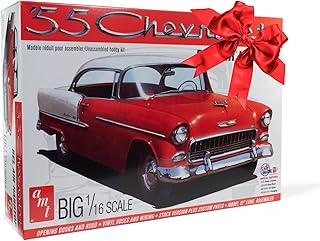
This AMT 1955 Bel Air Hardtop kit is a robust 1:16 scale option featuring a 90+ part count. It is molded in white, clear, and chrome-plated finishes, with color guidance typically included to help achieve an authentic look. The kit is classified as Skill Level 3 and requires paint and glue for assembly. It offers a satisfying challenge for intermediate builders who appreciate classic styling and a well-proportioned final model that can serve as a standout display piece in a collection of mid-century American cars.
AMT 1:25 Scale 1967 Shelby GT-350

The 1967 Shelby GT-350 by AMT is a crowd-pleasing 1:25 scale kit with 123 parts and a paint-and-glue requirement typical of the era’s models. It captures the Shelby’s iconic silhouette and features detailed elements such as a Ford 289 V8 engine, authentic water-slide decals, a rear lower pan, chrome wheels, custom taillights, and a distinctive front grille. The kit supports a classic, high-contrast paint scheme and offers a rewarding project for collectors and builders who enjoy authentic period-correct details and a traditional assembly experience. Some parts are chrome plated, providing extra realism for display-ready results.
C.P.M. MPC 1967 Pontiac GTO Hard-Top

This 1:25 scale Pontiac GTO kit emphasizes the V8 power that defined the era’s muscle cars. Features include a detailed 400 cubic inch V8 engine, separate rear suspension and exhaust components for added realism, and interior touches such as bucket seats and a floor shifter with a console. The kit prioritizes mechanical detail and authentic under-hood and interior presentation, making it a suitable choice for builders who enjoy analyzing engine layouts and matching detailed chassis components with a faithful interior replica. It’s suitable for hobbyists seeking a step up from simpler kits without the complexity of the most advanced editions.
Revell 1969 Pontiac GTO Judge 1:24 Kit

The Revell 14530 kit offers a scaled-down 1:24 model of the iconic 1969 Pontiac GTO Judge, featuring 63 parts and Skill Level 4. This kit includes optional rear spoiler decals and four selectable Judge color schemes. The engine is depicted as a robust Ram Air 400, with a Ram Air hood and an optional hood-mounted tachometer to capture performance-era charisma. It appeals to builders who want a mid-range complexity project with distinctive styling cues, strong decal options, and a range of color choices for display. The kit’s fewer parts compared to larger scales can allow for quicker completion while still delivering a visually striking result.
Buying Guide
Key purchase considerations for 1:12 and related scale model car kits include:
- Skill level and complexity: Match the kit’s Skill Level to your experience. Higher-numbered levels indicate more challenging builds with more parts and intricate details.
- Parts count and scale: Larger scales such as 1:12 emphasize engine detail and under-hood accuracy, while 1:16–1:25 scales offer a balance between detail and manageability for intermediate builders.
- Detail fidelity: Look for explicit engine, chassis, and interior components. Kits with separate suspension, exhaust, or decal options provide richer customization.
- Assembly finishes: Some kits include chrome parts, clear parts, or chrome plating; others rely on paint and glue alone. Consider your preferred finishing approach.
- Decals and branding: Water-slide decals and optional graphics help reproduce period-correct looks. Availability of multiple color schemes expands display choices.
- Tools and supplies: Check if paint, cement, or adhesives are required; ensure you have compatible brands and colors on hand for the best results.
- Display considerations: Decide whether you want a model as a display piece or a working build. Some enthusiasts prefer authenticity in engine detail and interior accuracy for showroom display.
- Durability and shelf life: Some finishes resist yellowing or corrosion differently; plan for an appropriate protective display setting.
When selecting a kit, consider your storage space and the time you’re willing to invest. Intermediate and advanced kits typically require more time and precise handling but yield highly rewarding end results. For collectors, choosing models from different eras can create a cohesive display that highlights the evolution of muscle and classic-car design.